

Adhesive Selection in Insulation and Sandwich Panel Production: Polyurethane Adhesives and Pressing Criteria
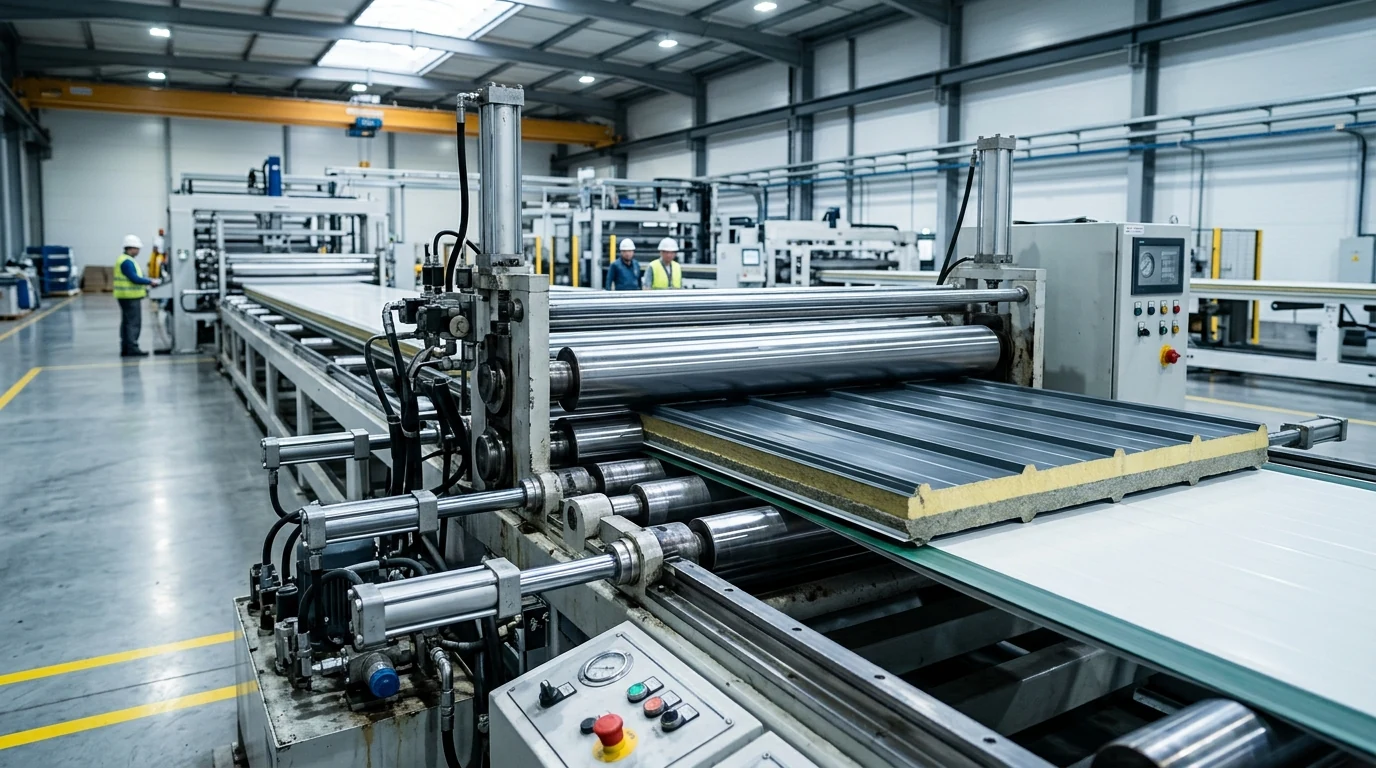
In insulation and sandwich panel production; Single-component (1K) or two-component (2K) reactive polyurethane (PUR) adhesives are used for joining painted sheet metal, aluminum, CPL or wooden exterior surfaces with EPS, XPS, polyurethane sponge or rock wool insulation cores. Thanks to their light foaming (controlled expansion) ability, polyurethane adhesives fill the gaps in rough and porous insulation layers such as rock wool; It creates high structural bond strength against water, moisture, external weather conditions and fire retardant mineral fillings.
Energy efficiency, fire safety and fast assembly demands in the modern construction industry have made the use of sandwich panels and composite structural elements indispensable. In roof and facade panels, cold storage panels, modular prefabricated structures, marine ship compartments and caravan walls, two outer layers with different physical properties must be permanently combined with an insulation core. The integrity of this composite structure, its ability to resist wind suction forces and temperature differences, directly depends on the quality of the structural polyurethane adhesive .
As Koçak Endüstri, we offer high engineering assurance in the production of sandwich panels and building elements with Mayer MT-PUR Marine (TDS-PUR-687) and Jowat polyurethane solutions , one of our verified products for the construction and marine industry.
Structural function of adhesive in sandwich panels and structural elements
In a sandwich panel, while the outer sheets carry the compressive and tensile stresses, the insulation core in the middle bears the shear stresses. The adhesive layer interlocks these two opposing worlds. As soon as the adhesive breaks, the panel loses its structural support (delamination) and the outer sheet collapses due to wind load. For this reason, sandwich panel adhesives must be flexible, resistant to aging and vibration damping.
Insulation core and outer shell combinations (EPS, XPS, Rockwool)
| Controlled expansion and void filling to wet the fibrous and dusty surface. | ________Should not contain solvents; The solvent melts the EPS foam. |
| Sanding or corona pre-treatment of XPS surfaces. | Structural resistance to salt water, moisture and dynamic sea wave vibrations. |
1K moisture curing and 2K reactive polyurethane systems
- Single Component (1K) Moisture Cure PUR: Reacts with moisture in the air and material. Its application is practical, there is no risk of mixing error. To accelerate the reaction, micronized water mist is sprayed on the surface after the glue is applied.
- Two-Component (2K) PUR: It works by mixing resin and isocyanate hardener in a static mixer. Since it cures independently of moisture, it hardens very quickly and homogeneously even between two thick metal sheets that are impermeable to air and gas.
Pressing parameters: Pressing time, open time and water mist
- Glue Weight: It should be applied homogeneously between 100 and 250 g/m² with a comb nozzle or multiple nozzle bridge, depending on the surface absorbency.
- Water Mist Dosage (in 1K Systems): Chemical cross-linking should be initiated by spraying fine water vapor, approximately 5–10% of the glue weight.
- Press Pressure and Time: In continuous line presses or hydraulic discontinuous presses, controlled pressure (0.2–0.5 bar) should be applied that will not crush the core material.
Mayer MT-PUR Marine and Jowat construction solutions
Mayer MT-PUR Marine (TDS-PUR-687) , which is in the Koçak Endüstri product family; Offers proprietary strength in structural installation of hardwood, HPL/CPL, galvanized and stainless steel, aluminum and EPS/XPS sandwich panels. This system, which is applied at room temperature (>+10°C) and has a fluidity of 8,000 ± 2,000 mPa·s, provides high strength in the production of marine and construction elements.
Stock and technical support
You can examine the technical data sheets for mineral wool adhesion strength, delamination risks or marine insulation panel assembly in your sandwich panel production line; To request on-site line testing and samples from our experts, you can contact us on our Contact page.
Adhesive Selection in Insulation and Sandwich Panel Production: Polyurethane Adhesives and Pressing Criteria hakkında merak edilenler
Why is polyurethane adhesive used in sandwich panels?
Polyurethane adhesives are solvent-free (does not melt the foam), expands slightly, fills the pores of rock wool and EPS, and creates a structural bond that is resistant to water, moisture and heat.
Why is water mist sprayed on 1K polyurethane adhesive?
1K PUR adhesives cure with moisture; Controlled water mist is required to complete the reaction in a timely manner, especially when bonding non-porous surfaces such as metal.
In which sandwich panels is Mayer MT-PUR Marine used?
Mayer MT-PUR Marine reference TDS-PUR-687; It is used in hard wood, aluminum, galvanized sheet, stainless steel, stone and EPS/XPS sandwich panel installations.
What causes delamination (sheet separation) in sandwich panels?
It is caused by insufficient glue grammage, exceeding the open time, premature removal of pressing pressure or oil/dirt layer on the metal surface.
Technical resources and verification
The content has been prepared in Turkish with the technical experience of Koçak Endüstri, based on the following manufacturer resources.
Let's choose the right adhesive for your application together
You can get technical guidance and offers for Jowat products by sharing your machine, material and consumption information.
Get a technical quote

