


Sole Delamination and Peeling in Footwear Manufacturing: Primers, Halogenation, and Heat-Activated PUR Adhesives on TPU, Rubber, and EVA
Outsole delamination in athletic, safety, and leather footwear stems from mold release oils and low surface energy on substrates like vulcanized rubber, lightweight EVA, and TPU. Chemical surface preparation—such as chlorination (halogenation) for rubber outsoles and specialized primers for EVA—is mandatory for durable bonding. High-crystallizing polyurethane (PUR) cements (Jowacoll®) reactivated under infrared flash heaters at 65°C–75°C and bonded under 4–6 bar pneumatic pressure achieve permanent material-tearing adhesion.
Outsole bonding strength defines footwear longevity and brand reputation. Premature sole peeling ruins customer confidence. Achieving unbreakable sole-to-upper bonds relies on scientific surface halogenation and heat-activated polyurethane adhesive systems.
3. The Chemistry of Halogenation (Chlorination) for Rubber
Vulcanized rubber outsoles lack polarity. Applying halogenation solution creates chlorine bridges across carbon double bonds, transforming the slick rubber surface into a high-energy polar foundation ready for PUR cement.
5. Heat-Activated Polyurethane Cements & Pneumatic Pressing
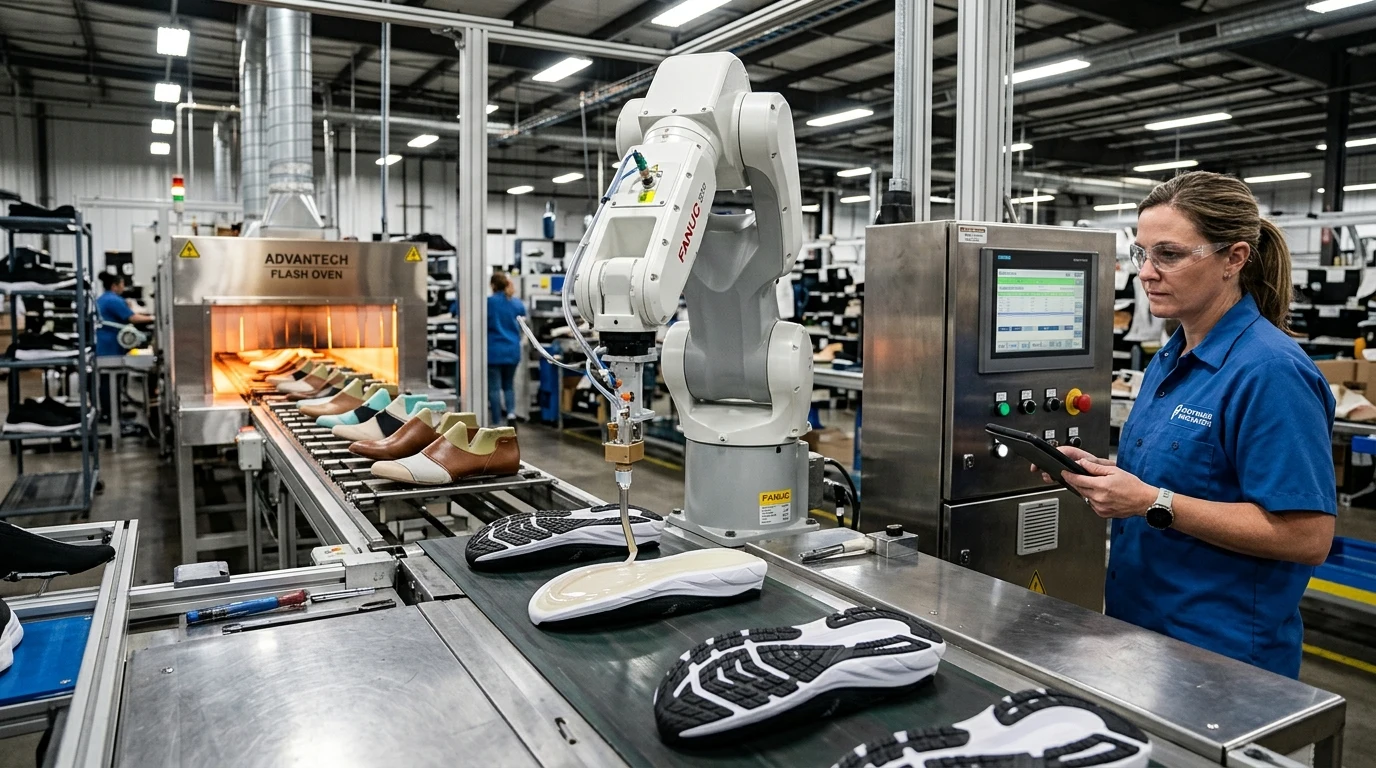
Once dried, PUR adhesive films pass through infrared flash reactivators (65°C–75°C) to melt crystalline structures before immediate hydraulic/pneumatic pressing at 4–6 bar.
7. Frequently Asked Questions (FAQ)
For shoe factory line audits and primer samples, contact Koçak Endüstri.
Sole Delamination and Peeling in Footwear Manufacturing: Primers, Halogenation, and Heat-Activated PUR Adhesives on TPU, Rubber, and EVA hakkında merak edilenler
Why is halogenation required on rubber outsoles?
Rubber is non-polar and repels adhesive. Halogenation attaches chlorine molecules, creating polar bonding sites for polyurethane cement.
Why does adhesive peel off untreated EVA outsoles?
EVA contains mold-release lubricants and closed hydrophobic cells. Mechanical roughing and dedicated EVA primers are mandatory.
Why is infrared heat activation necessary for sole cementing?
PUR cements crystallize into a dry film after application. Flash heating to 65°C–75°C melts the polymer crystals, creating high tack for immediate pressing.
How long should cemented shoes cure before wear testing?
Handling strength is instant upon press release, but full cross-linking and dynamic peel strength require 24 hours of rest.
Technical resources and verification
The content has been prepared in Turkish with the technical experience of Koçak Endüstri, based on the following manufacturer resources.
Let's choose the right adhesive for your application together
You can get technical guidance and offers for Jowat products by sharing your machine, material and consumption information.
Get a technical quote

