

Hypoallergenic PSA Hot Melt in Medical Wound Dressings, Surgical Tapes, and Drapes: Skin Adhesion and Pain-Free Removal
Adhesives used in medical wound dressings, surgical tapes, and operating theatre incision drapes must guarantee zero skin irritation, strong barrier adhesion, and gentle, pain-free removal. 100% solid solvent-free hypoallergenic PSA (Pressure-Sensitive Adhesive) hot melts meet the strictest biocompatibility criteria under ISO 10993-5 (cytotoxicity) and ISO 10993-10 (irritation and skin sensitization). Utilizing breathable pattern coating technologies (MVTR > 2,500 g/m²·day), they prevent skin maceration while effectively mitigating Medical Adhesive-Related Skin Injury (MARSI) through engineered peel cohesion.
Medical wound dressings, surgical adhesive tapes, and incision drapes are critical medical devices that interface directly with human skin. Adhesives utilized in these applications must adhere reliably despite patient perspiration and moisture, yet release gently without causing epidermal stripping, erythema, or allergic dermatitis. Replacing traditional solvent-based acrylics, modern Hypoallergenic PSA (Pressure-Sensitive Adhesive) Hot Melts offer zero chemical residue and superior breathability. This technical guide reviews medical PSA formulation dynamics, ISO 10993 biocompatibility testing, MARSI mitigation strategies, and cleanroom coating standards.
1. Essential Functions of Pressure-Sensitive Adhesives (PSA) in Medical Applications
Pressure-sensitive adhesives adhere instantly upon the application of light fingertip pressure, requiring no solvent evaporation or heat activation. Medical hot melt PSA formulations balance three foundational rheological properties:
- Initial Tack: The adhesive must wet out instantly into microscopic skin crevices upon contact.
- Cohesive Strength: High internal molecular cohesion prevents adhesive transfer and ensures clean, residue-free removal from skin.
- Controlled Peel Adhesion: Maintains continuous skin contact over 24 to 72 hours, engineered with an peel angle that does not avulse the stratum corneum upon dressing changes.
2. Biocompatibility and Safety: ISO 10993 Cytotoxicity and Skin Sensitization Standards
Medical adhesives must comply with the harmonized global ISO 10993 Biological Evaluation of Medical Devices directives:
| Performance Attribute | Solvent-Based Acrylic | Waterborne Emulsion | Hypoallergenic PSA Hot Melt |
|---|---|---|---|
| Solvent & VOC Emissions | High (Requires drying ovens) | Low (Water evaporation) | Zero (100% Solids, VOC-Free) |
| Skin Irritation & Erythema | Moderate to High (Solvent residues) | Low | Zero (Hypoallergenic, ISO 10993) |
| Gentle Skin Release | Aggressive (Stripping risk) | Moderate | Excellent (Engineered peel curve) |
| Breathability (MVTR) | Continuous barrier, limited | Moderate | Very High (Pattern coating) |
| Line Speed & Productivity | Low (Oven bottlenecks) | Moderate | Very High (> 250 m/min) |
| Shelf Life & Stability | Limited (Chemical aging) | Freeze-thaw sensitive | Outstanding (24+ months stable) |
Accredited biological laboratory verifications:
- ISO 10993-5 (In Vitro Cytotoxicity): Adhesive eluates demonstrate zero cytotoxic reactivity (Grade 0) on mammalian fibroblast cell lines.
- ISO 10993-10 (Skin Irritation & Sensitization): Repeated animal and human patch tests confirm zero primary irritation or delayed-type hypersensitivity.
- FDA 21 CFR 175.105: Full regulatory compliance for medical and indirect pharmaceutical contact materials.
3. Gentle Release Mechanics and Preventing Medical Adhesive-Related Skin Injury (MARSI)
In acute care, neonatal, and geriatric settings, a major clinical challenge is Medical Adhesive-Related Skin Injury (MARSI), including skin tears and epidermal detachment:
- Mitigating Stratum Corneum Stripping: Fragile or aged skin possesses thin epidermis. If peel adhesion exceeds cellular binding strength, painful tissue injury occurs. Modified medical PSAs feature low surface energy and viscoelastic damping that release without hair pulling or skin trauma.
- Residue-Free Removal: Adhesive remnants harbor microbial colonization. Highly cohesive formulations peel off cleanly in a single continuous piece.
- Atraumatic Dressing Changes: For burn care and chronic wounds requiring frequent changes, hypoallergenic PSAs significantly improve patient compliance and wound healing outcomes.
4. Fluid Barrier Integrity and Moisture Vapor Transmission Rate (MVTR) in Incision Drapes
Antimicrobial incise drapes placed over the surgical field perform dual functions under sterile operating conditions:
- Impermeable Barrier: Prevents bodily fluids, irrigation saline, and surgical antiseptics (iodine, chlorhexidine) from undermining the adhesive perimeter.
- Moisture Vapor Transmission Rate (MVTR): Natural perspiration must evaporate through the drape (MVTR > 2,500 g/m²·day). Insufficient breathability causes tissue maceration and accelerates bacterial proliferation.
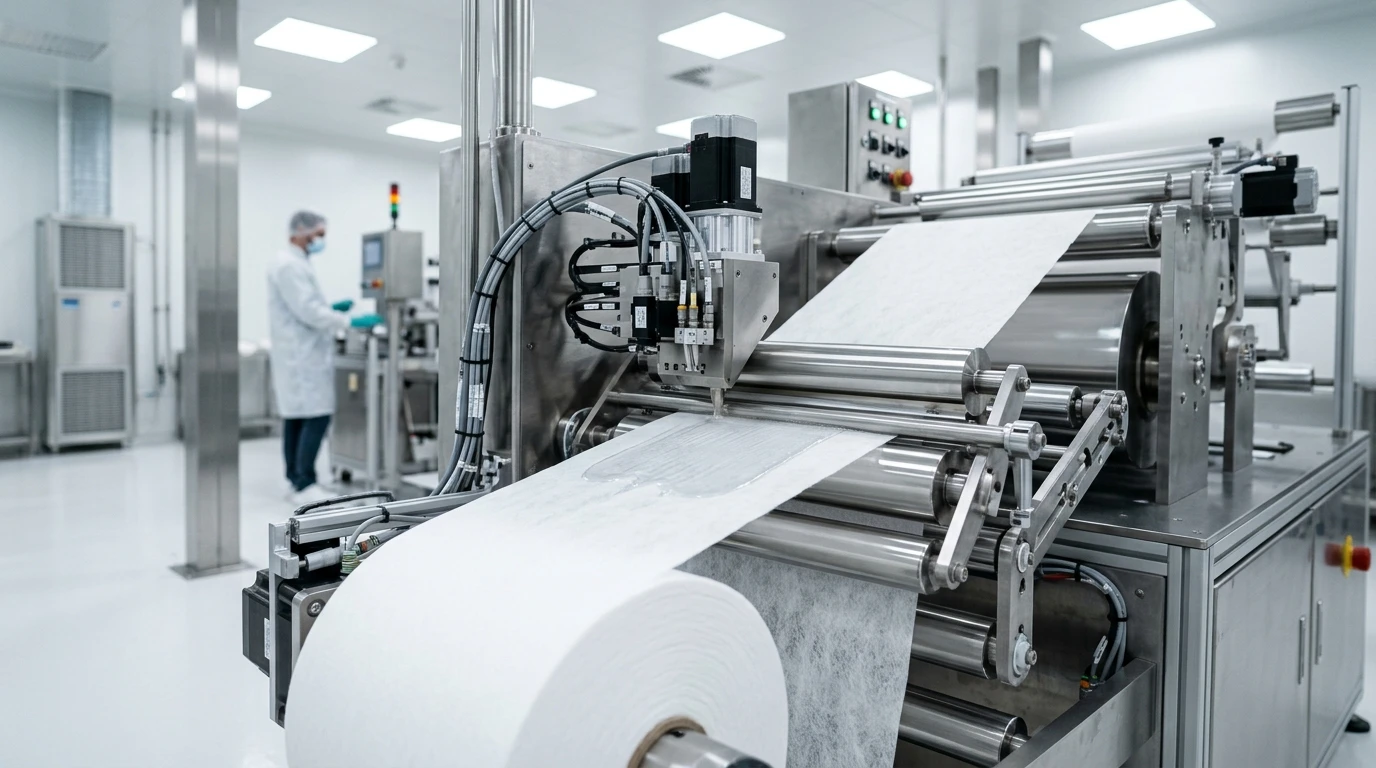
5. Cleanroom Rotary Die and Spray Hot Melt Coating Dynamics
Medical tape converting is conducted under ISO Class 7 or Class 8 cleanroom environments:
- Rotary Die / Slot Die Coating: Delivers micron-precise, uniform or striped coatings onto nonwovens and breathable polyurethane films.
- Meltblown Spray Coating: Filaments are atomized to form breathable fibrous matrices, maximizing air and moisture permeability.
- Nitrogen-Blanketed Melting: Melt tanks under inert nitrogen atmospheres prevent thermal degradation, maintaining water-white clarity (Gardner index < 1).
6. Koçak Endüstri Medical and Skin-Friendly PSA Solutions
Koçak Endüstri supplies Jowat®'s certified medical hot melt adhesives to healthcare manufacturers:
- Jowat® Medical PSA Hot Melts: Certified under ISO 10993, offering water-white transparency, neutral odor, and tunable peel strengths.
- Surgical Drape & Plaster Formulations: Antiseptic-resistant, high-MVTR, and high-cohesion adhesives.
- Cleanroom Technical Consulting: Coating weight optimization (15–45 g/m²), slot-die calibration, and comprehensive laboratory support.
7. Frequently Asked Questions (FAQ)
Hypoallergenic PSA Hot Melt in Medical Wound Dressings, Surgical Tapes, and Drapes: Skin Adhesion and Pain-Free Removal hakkında merak edilenler
Why is ISO 10993 certification mandatory for medical PSA hot melts?
Because the adhesive directly contacts human skin; ISO 10993 guarantees zero cytotoxicity, irritation, or allergic sensitization.
How is pain-free adhesive removal achieved without sacrificing bond security?
Through high internal cohesion and tailored viscoelastic rheology, preventing the adhesive from stripping epidermal cells or bonding excessively to body hair.
How do surgical incision drapes balance liquid barrier properties with breathability?
By pairing breathable polyurethane films with high-MVTR patterned or fibrous adhesive coatings, allowing moisture vapor to escape while blocking liquid fluids.
What are the core advantages of hot melt PSAs over solvent-based medical adhesives?
Hot melts are 100% solid, free of solvent odors and chemical residues, environmentally sustainable, require no drying ovens, and triple line conversion speeds.
Technical resources and verification
The content has been prepared in Turkish with the technical experience of Koçak Endüstri, based on the following manufacturer resources.
Let's choose the right adhesive for your application together
You can get technical guidance and offers for Jowat products by sharing your machine, material and consumption information.
Get a technical quote

