


Wire Harness Banding and Hot Melt Injection in Automotive: 150°C Heat and Vibration Standards
Securing automotive wire harnesses against 150°C peak under-hood temperatures, mechanical vibrations, and automotive fluids requires high-performance polyamide (PA) hot melt injection. Polyamides feature high softening points (>165°C Ring & Ball) and superior dielectric strength, applied via Low Pressure Molding (LPM) around rubber grommets and connector backs. Compared to legacy 2K epoxies or polyurethanes, they solidify within 15–30 seconds, reducing cycle times by 80%. Meeting LV 214 and USCAR-2 automotive sealing norms (IP67), polyamide systems prevent wire chafing and eliminate in-cabin buzz, squeak, and rattle (BSR) noises.
Modern passenger and commercial vehicles incorporate over 3,000 meters of electrical wiring, hundreds of sensors, and dozens of Electronic Control Units (ECUs). The most vulnerable nodes in this complex neural architecture are the rubber firewall pass-through grommets and multi-pin connectors in the engine bay. Enduring temperatures reaching 150°C, engine oil splashes, and intense mechanical vibrations requires reactive polyamide (PA) hot melt engineering. In this technical guide, we analyze polyamide hot melt injection, Low Pressure Molding (LPM) dynamics, LV 214 test standards, and acoustic BSR dampening methodologies.
1. Environmental Conditions and Thermal Challenges in Automotive Wire Harnesses
Automotive wire harnesses operate under extreme mechanical, thermal, and chemical environments. Near engine blocks and exhaust manifolds, standard adhesive formulations degrade prematurely:
- Continuous High Thermal Stress: Continuous under-hood operating temperatures routinely hit 125°C, with peak excursions up to 150°C (ISO 6722 Class T4). Standard EVA adhesives soften and slump above 85°C.
- Aggressive Fluid Ingress: Motor oil, brake fluid, engine coolant, and road salts persistently attack cable insulation and sealing interfaces.
- Severe Harmonic Vibration: Engine cycles (1,000–6,000 RPM) cause unanchored wires to rub against chassis sheet metal, inducing fretting corrosion and terminal fatigue.
2. Polyamide (PA) Hot Melt Technology: 150°C Thermal, Oil, and Chemical Resistance
Synthesized from dimer fatty acids, thermoplastic polyamide hot melts offer unparalleled performance in high-temperature automotive electronics. Hydrogen bonding within the polyamide polymer backbone provides extraordinary thermal and chemical resilience:
| Engineering Metric | Standard EVA Hot Melt | Polyolefin (PO) Hot Melt | Reactive Polyamide (PA) Hot Melt |
|---|---|---|---|
| Softening Point (R&B) | 80°C – 105°C | 110°C – 130°C | 155°C – 190°C |
| Service Temperature | -20°C to +70°C | -30°C to +100°C | -40°C to +150°C (Class T4) |
| Oil & Fuel Resistance | Poor (Swelling and softening) | Moderate | Excellent (Highly resistant) |
| Dielectric Strength | Moderate | Good | Superior (> 25 kV/mm) |
| Cycle / Setting Time | 20 – 40 sec | 20 – 40 sec | 15 – 30 sec (Ultra fast) |
| Molding Method | Manual gun | Standard dispenser | Low Pressure Molding (LPM) |
3. Low Pressure Molding (LPM) for Grommet and Connector Potting Sealing
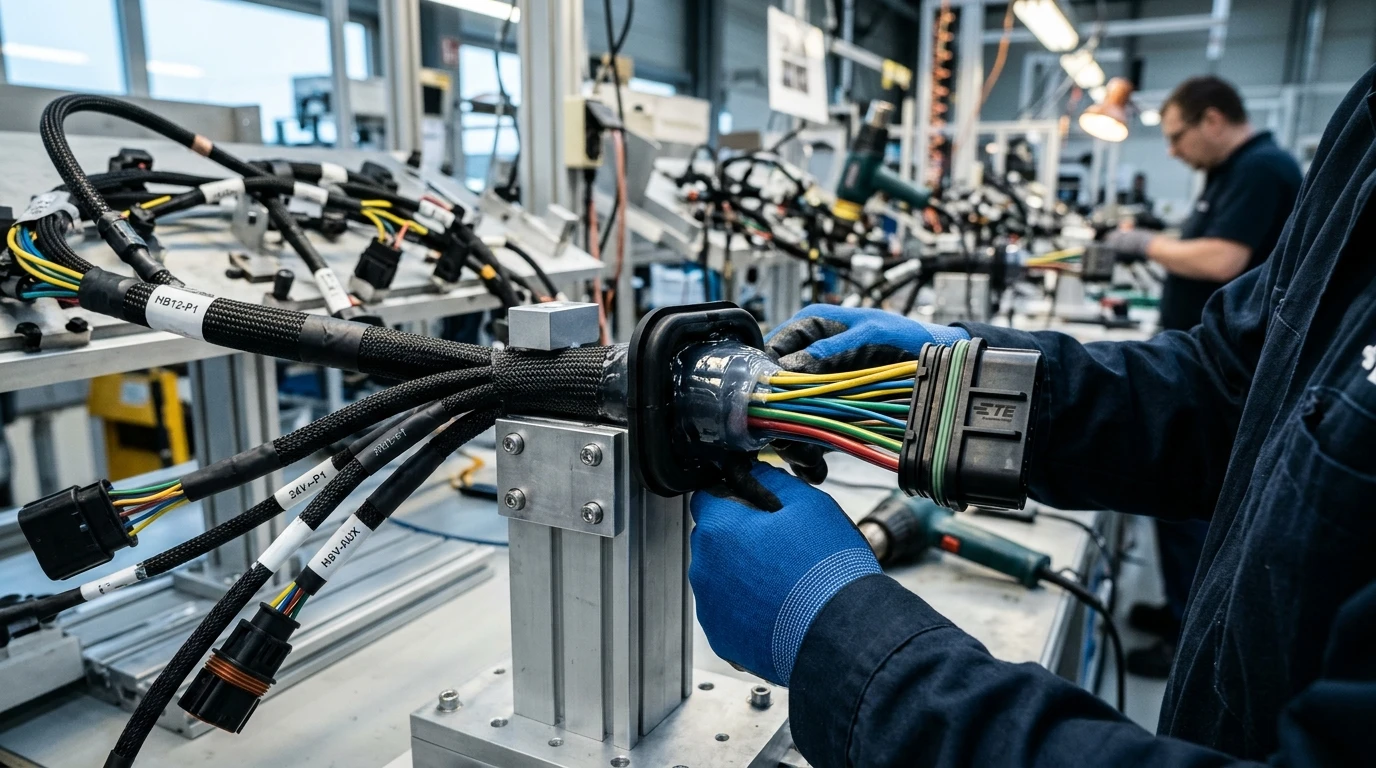
Where harnesses breach firewalls or doors, rubber pass-through grommets are injected with molten polyamide hot melt via Low Pressure Molding (LPM):
- Low Injection Pressure (2 – 20 Bar): Unlike high-pressure plastic injection (500–1,000 bar), LPM will not pinch delicate copper strands, bend connector pins, or dislodge soldered sensor joints.
- Hermetic Seal & Strain Relief: The molten polyamide flows into the interstices between individual wire strands, achieving IP67 environmental sealing while acting as integrated strain relief.
- Zero Solvents & VOCs: As 100% solids thermoplastics, polyamides eliminate toxic off-gassing and the lengthy oven-cure cycles required by two-component resins.
4. Harness Banding, Acoustic Insulation, and Vibration (BSR) Dampening
Inside the passenger cabin, loose wiring harnesses cause annoying Buzz, Squeak & Rattle (BSR) noises against dashboard and interior trim panels:
- Acoustic Felt Wrapping: Cables are wrapped in polyester or velour fleece tape, with high-tack hot melt applied to tape tails to eliminate unravelling.
- Spot Adhesive Anchoring: Automated robotic dispensers apply elastomeric hot melt beads at chassis contact points, permanently anchoring harnesses and absorbing kinetic energy.
- Clean Cut-off (Zero Stringing): Clean nozzle cut-off without stringing prevents adhesive deposits on electrical terminal contacts and maintains lean assembly cleanliness.
5. Automotive OEM Test Norms: LV 214, USCAR-2, and ISO 6722 Standards
Automotive OEMs mandate rigorous compliance for all harness bonding and potting materials:
- LV 214 Connector Validation: IP67/IP69K ingress protection, thermal shock (-40°C to +150°C over 500 cycles), and dynamic vibration resistance.
- USCAR-2 / USCAR-21: North American automotive standards validating corrosion protection on crimped terminals and connectors.
- UL 94 V-0 Flame Retardancy: Adhesives must self-extinguish without propagating combustion in short-circuit conditions.
6. Koçak Endüstri & Jowat Polyamide Wire Harness Solutions
Koçak Endüstri delivers Jowat®'s advanced polyamide and polyolefin adhesive portfolio to the automotive supply chain:
- Jowat® High-Temp Polyamide Hot Melts: Formulated for 160°C – 190°C softening points, thermal stability, and clean dispensing.
- Specialized LPM Granules: Optimized for low viscosity, fast cycle times, and robust adhesion to PVC, XLPE, and PTFE wire jackets.
- Technical Field Support: Nozzle temperature calibration, cycle time optimization, and OEM qualification assistance.
7. Frequently Asked Questions (FAQ)
Wire Harness Banding and Hot Melt Injection in Automotive: 150°C Heat and Vibration Standards hakkında merak edilenler
Why are polyamide (PA) hot melts the industry standard for under-hood wiring harnesses?
Polyamides withstand continuous temperatures above 150°C, resist automotive fluids, and provide reliable dielectric insulation against electrical shorts.
What advantages does Low Pressure Molding (LPM) offer over 2K potting resins?
LPM cools in 15–30 seconds rather than hours, releases zero toxic VOCs, and uses gentle pressures that protect delicate electronic components.
How can adhesive stringing be prevented during high-speed harness assembly?
By maintaining precise nozzle temperatures (190°C–210°C), using positive air shut-off valves, and selecting adhesives with clean shear-thinning rheology.
What role do adhesives play in preventing interior vehicle BSR noises?
They secure acoustic felt tapes and bond harnesses to chassis structures, damping vibrations and preventing plastic-to-metal impact noises.
Technical resources and verification
The content has been prepared in Turkish with the technical experience of Koçak Endüstri, based on the following manufacturer resources.
Let's choose the right adhesive for your application together
You can get technical guidance and offers for Jowat products by sharing your machine, material and consumption information.
Get a technical quote

