


Hot Melt Adhesive Engineering in Industrial Filter Manufacturing: HEPA, HVAC, and Automotive Pleating
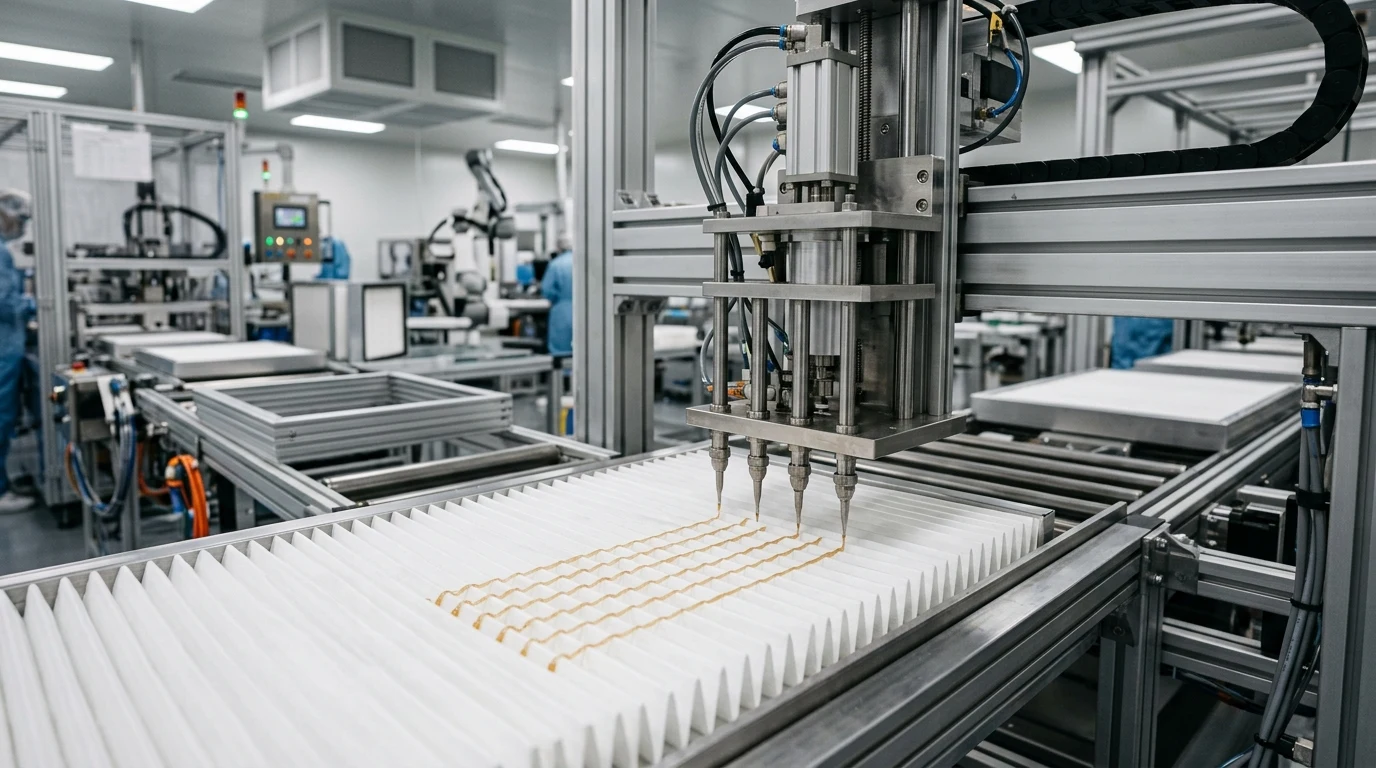
In HEPA, HVAC air handling, and automotive filter manufacturing, hot melt adhesives perform two critical engineering functions: Pleat Separation / Spacing and Frame Potting / Bonding. Pleat-separating hot melt beads applied across micro-glass or synthetic filter media prevent pleat bunching under high airflow, maintaining laminar velocity and low pressure drop (Delta P). For high-heat engine environments up to 160°C, chemical-resistant polyamide (PA) adhesives are mandatory, while cleanroom HEPA filters utilize odorless polyolefins.
Cleanroom HEPA filters, commercial HVAC units, and automotive powertrain filters rely on pleated media to maximize effective filtration surface area within compact housings. Maintaining precise spacing between pleats under heavy differential pressure is governed by pleating hot melt adhesives.
2. What is Pleat Separation and How Does It Operate?
On high-speed blade or rotary pleaters, multi-nozzle manifolds dispense parallel glue beads directly onto the moving web. The adhesive must exhibit rapid open-to-set transition to preserve pleat geometry without stringing or media damage.
3. Adhesive Chemistry: Polyamide (PA) vs Polyolefin (PO)
While odorless polyolefins dominate HVAC and cleanroom HEPA panels, automotive oil and intake filters require polyamides capable of withstanding temperatures exceeding 150°C and aggressive engine fluids.
6. Frequently Asked Questions (FAQ)
For filter adhesive recommendations and on-site line audits, contact Koçak Endüstri.
Hot Melt Adhesive Engineering in Industrial Filter Manufacturing: HEPA, HVAC, and Automotive Pleating hakkında merak edilenler
What is the function of pleat separation hot melt?
It serves as a physical spacer between folded filter pleats, preventing them from bunching under airflow and maintaining unrestricted air passage.
Why is polyamide (PA) hot melt mandatory in automotive filters?
Under-hood temperatures exceed 130°C–150°C in the presence of fuel vapors and engine oil. Polyamides resist both heat and hydrocarbon exposure.
Do HEPA cleanroom adhesives outgas or smell?
No. Certified polyolefin pleating hot melts are high-purity, VOC-free, and odorless for cleanroom compliance.
What happens if adhesive strings during pleating?
Adhesive tails contaminate filter pores, increasing pressure drop and causing aesthetic defects.
Technical resources and verification
The content has been prepared in Turkish with the technical experience of Koçak Endüstri, based on the following manufacturer resources.
Let's choose the right adhesive for your application together
You can get technical guidance and offers for Jowat products by sharing your machine, material and consumption information.
Get a technical quote

