

PUR Hot Melt Maintenance Protocol: End of Shift, Product Changeover and Unplanned Downtime
There is no single general cleaning step in PUR hot melt care. End of shift manages moisture and exposure risk with approved waiting conditions; product migration requires controlled unloading and commissioning with verified chemical compatibility; In case of an unplanned stop, energy, pressure and hot surface safety are ensured first. Each operation must be performed by trained personnel in accordance with the current TDS/SDS, equipment manual and the facility's lockout-tagout procedure.
Reactive PUR hot melt systems are sensitive to moisture, temperature history, dwell time and material remaining in the system. Therefore, the maintenance plan cannot consist only of the “clean nozzle” instruction. End of shift, product transition and unplanned downtime should be treated as separate risk classes; The exact temperature, holding, draining and cleaning material should only be obtained from the current product documentation and equipment manufacturer's procedure.
Safety limit first
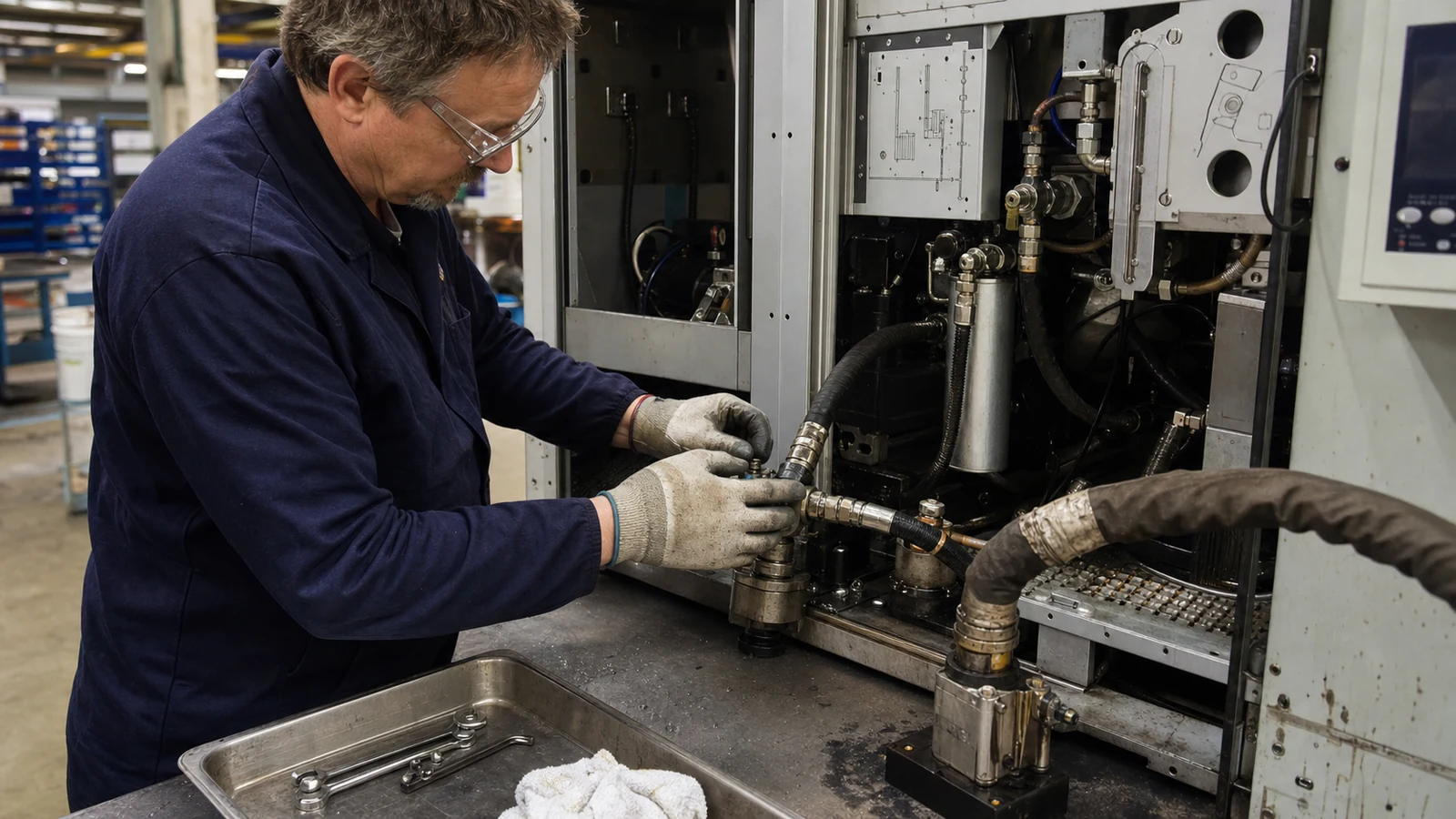
Safety warning: Hot hot melt; It carries the risk of thermal burn, pressurized flow and chemical exposure. Intervention should only be carried out by trained personnel; It should be done with appropriate eye/face, hand and body protection, energy isolation, pressure relief and the facility's lockout-tagout procedure.
- Open the product's current TDS and SDS document, equipment manual and facility work instructions together.
- Verify the energy, pressure and hot surface status of the tank, hose and nozzle before operation.
- Do not add solvents, cleaners or other hot melt products that do not have technical approval to the system.
- Manage waste, debris and used cloth/equipment according to SDS and local legislation.
Three maintenance scenarios are not the same
| Trigger | Main purpose | Data to be recorded |
|---|---|---|
| End of shift / planned standby | Safe standby by protecting the product from moisture and unnecessary heat history | Stop time, product, system status, approved standby mode |
| Product or technology transition | Avoid incompatible mix and performance deviation | Old/new product, approval reference, discharge-pass method, first sample |
| Unplanned shutdown / alarm | Safeguarding personnel and equipment, identifying the cause without exaggerating damage | Alarm, temperature/pressure indicators, downtime, observed residue |
End-of-shift control
- Determine the dwell time in the production plan and compare with the approved dwell mode in the product/equipment documentation.
- Check that there is no open product left in the lid, seal, moisture barrier and feeding area.
- Write any deviations in nozzle circumference, filter pressure or flow behavior on the shift form; Do not intervene directly on the hot surface.
- If a long wait is required, obtain approval from the technical officer instead of automatically extending the standard shutdown.
Controlled decision in product transition
Different PUR products, PUR and thermoplastic hot melt, or different cleaning materials, although seemingly similar, may be chemically and process incompatible. Before the transition begins, it must be confirmed in writing whether the old and new product are allowed to co-exist.
- Define product code, batch, TDS version, and equipment sections in the migration plan.
- Determine the approved discharge or transition material and waste collection method.
- Create separate acceptance criteria for tank, filter, hose and nozzle.
- Separate line appearance, initial adhesion and final cure control on the first production sample.
- Do not accept mass production before the transition is completed.
Intervention order in unplanned stop
- Save the alarm; Safeguard energy, pressure and hot surface risks.
- Photograph/record downtime before changing product and indicators in the system.
- Separate the possibilities of curing, charring, filter clogging or mechanical failure.
- Do not randomly increase temperature, apply pressure or add chemicals without obtaining approval from the product and equipment technical teams.
- If safe reboot criteria are not met, place the system in service procedure.
Reboot and traceability
Write down the inspection result of the tank, filter, hose and nozzle and the parts replaced.
Record code, batch, opening time and transition/cleaning material used.
Add validated settings, first steady flow time, and operator observation.
Identify the person responsible for initial sample, final cure control and mass production acceptance.
For detailed system cleaning hot melt tank, filter and nozzle cleaning; Use together with PUR hot melt storage and handling guidelines for storage and moisture management.
PUR Hot Melt Maintenance Protocol: End of Shift, Product Changeover and Unplanned Downtime hakkında merak edilenler
Should the PUR hot melt system be completely emptied at the end of each shift?
This decision depends on the product, equipment and planned waiting time. No general rule should apply; current TDS, equipment manufacturer procedure and facility approved work instructions must be followed.
Can standard hot melt cleaner be used in PUR product transition?
It can only be used if its compatibility for that transition has been verified by the adhesive and equipment manufacturers. Unapproved cleaners or other hot melts should not be added to the system.
Does increasing the temperature during an unplanned stop clear the blockage?
Uncontrolled temperature increase can deteriorate the material, increase charring and increase safety risk. First, energy, pressure and hot surface safety must be ensured; The alarm cause must be diagnosed according to the technical procedure.
Why is the first sample kept separate on restart?
The material remaining in the system after transition or stoppage, flow and cure behavior may not be stable yet. First sample; line appearance, adhesion and final performance must be separated in a way that can be monitored until verified.
Technical resources and verification
The content has been prepared in Turkish with the technical experience of Koçak Endüstri, based on the following manufacturer resources.
Let's choose the right adhesive for your application together
You can get technical guidance and offers for Jowat products by sharing your machine, material and consumption information.
Get a technical quote

