


What is Polyurethane Sealant? For Which Applications?
Polyurethane mastic; It is a single-component polymeric material used for sealing, joint filling and elastic adhesion in construction and industrial manufacturing, gaining permanent elasticity by curing with moisture in the air. Its biggest difference from hard adhesives is that it absorbs vibration, wind load and thermal expansion at the joints of materials with different expansion coefficients such as concrete, metal, aluminum and glass, without cracking, with up to 25% expansion and mobility (movement tolerance).
In modern building elements, prefabricated panel assemblies, industrial container and vehicle body manufacturing, it is vital to join two surfaces together as well as to close the gap between them in a way that is impermeable to water, air, dust and noise. While rigid (hard) adhesives crack under dynamic movements, silicones have limitations such as not retaining paint or low mechanical tear resistance. At this point, polyurethane sealants (PU mastic) are the most reliable solution that combines high mechanical strength and permanent elasticity in a single body.
As Koçak Endüstri, we offer technical sealing solutions for your facilities and projects, documented with our polyurethane sealant product group and general product catalog .
What is polyurethane sealant and how does it work?
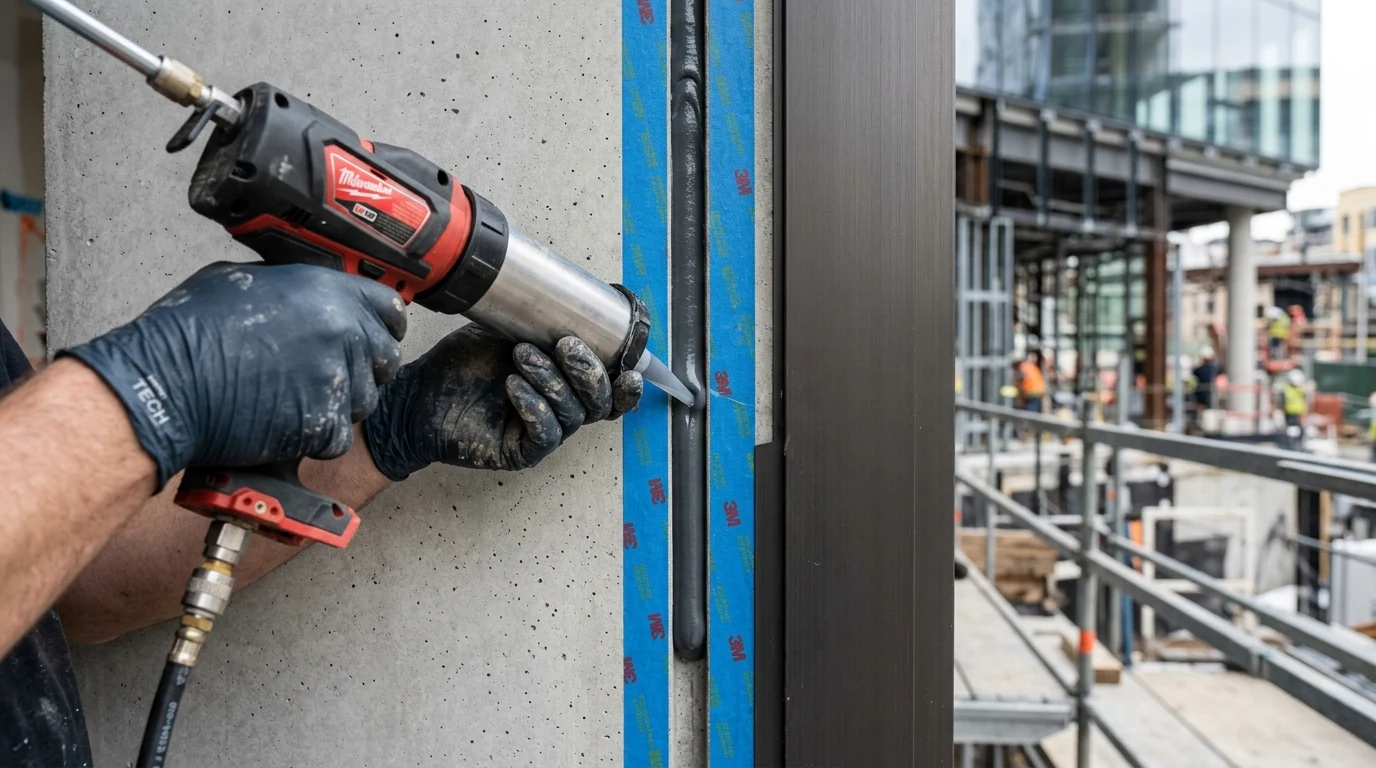
Polyurethane sealant is a single-component, thixotropic (does not flow on vertical surfaces) polyurethane-based sealing material that cures by reacting with ambient humidity in the air. When the cartridge or sausage is applied from the packaging to the joint with a manual or pneumatic gun:
- Skin Formation: It forms an elastic outer shell on the surface that is dry to the touch within the first 30-60 minutes.
- Moisture Curing (Deep Curing): It cures from the outside to the inside at a depth of approximately 2 to 3 mm per day, turning into a rubbery, extremely strong and elastic mass.
- Permanent Adhesion: It adheres perfectly to concrete, brick, anodized aluminum, stainless steel, wood and composite surfaces without the need for a primer (primer) or with a suitable primer.
Main differences between mastic and hard adhesive
Main documented uses
- Precast and Facade Panel Assembly: Watertight dilatation filler in concrete panel joints, parapet and window sill joints.
- Sandwich Panel and Roof Joints: Elastic sealing of roof gutters, panel joints and metal trapezoidal sheet connections.
- Metal, Glass and Composite Connections: Elastic connection of aluminum and glass or composite surfaces with different coefficients of thermal expansion.
- Industrial Container and Body Manufacturing: Vibration-resistant combination in truck bodies, caravans, modular cabins and ventilation ducts.
Joint geometry, application thickness and curing time
The most critical engineering rule in sealant application is the width/depth ratio . For joints up to 10 mm wide, width = depth (1:1). For joints wider than 10 mm, the depth should be half the width (2:1). In order to prevent the mastic from sticking to the base and to ensure that it adheres to only the two side walls, polyethylene backer rod (backer rod) should be placed in the joint.
Koçak Endüstri polyurethane sealant solutions
Polyurethane Sealant solutions on our website; It offers high adhesion strength, resistance to weather conditions and permanent sealing in your construction, building elements and industrial manufacturing projects. When necessary, bond strength is maximized with our primer solutions for surface preparation.
Stock and technical support
You can contact Koçak Endüstri to choose the most suitable polyurethane sealant product for the joint width, surface types and expected movement loads in your project and to get a wholesale supply offer.
What is Polyurethane Sealant? For Which Applications? hakkında merak edilenler
What is the difference between polyurethane sealant and silicone?
Polyurethane sealant can be painted after curing, its mechanical tear resistance and adhesion strength are much higher than silicone.
How long does polyurethane sealant dry?
Initial scab formation occurs within 30-60 minutes; Full cure progresses at a depth rate of 2-3 mm per day, depending on ambient temperature and humidity.
Why should joint filler roving be used?
To prevent the mastic from sticking to the base and to ensure that it only adheres to the two side walls (bi-directional operation); Otherwise, three-way tension will tear the mastic in half.
Can it be applied to a wet or damp surface?
There should be no free water accumulation on the surface; Excessively wet surfaces may cause foaming, it is ideal for the surface to be clean and dry.
Technical resources and verification
The content has been prepared in Turkish with the technical experience of Koçak Endüstri, based on the following manufacturer resources.
Let's choose the right adhesive for your application together
You can get technical guidance and offers for Jowat products by sharing your machine, material and consumption information.
Get a technical quote

