



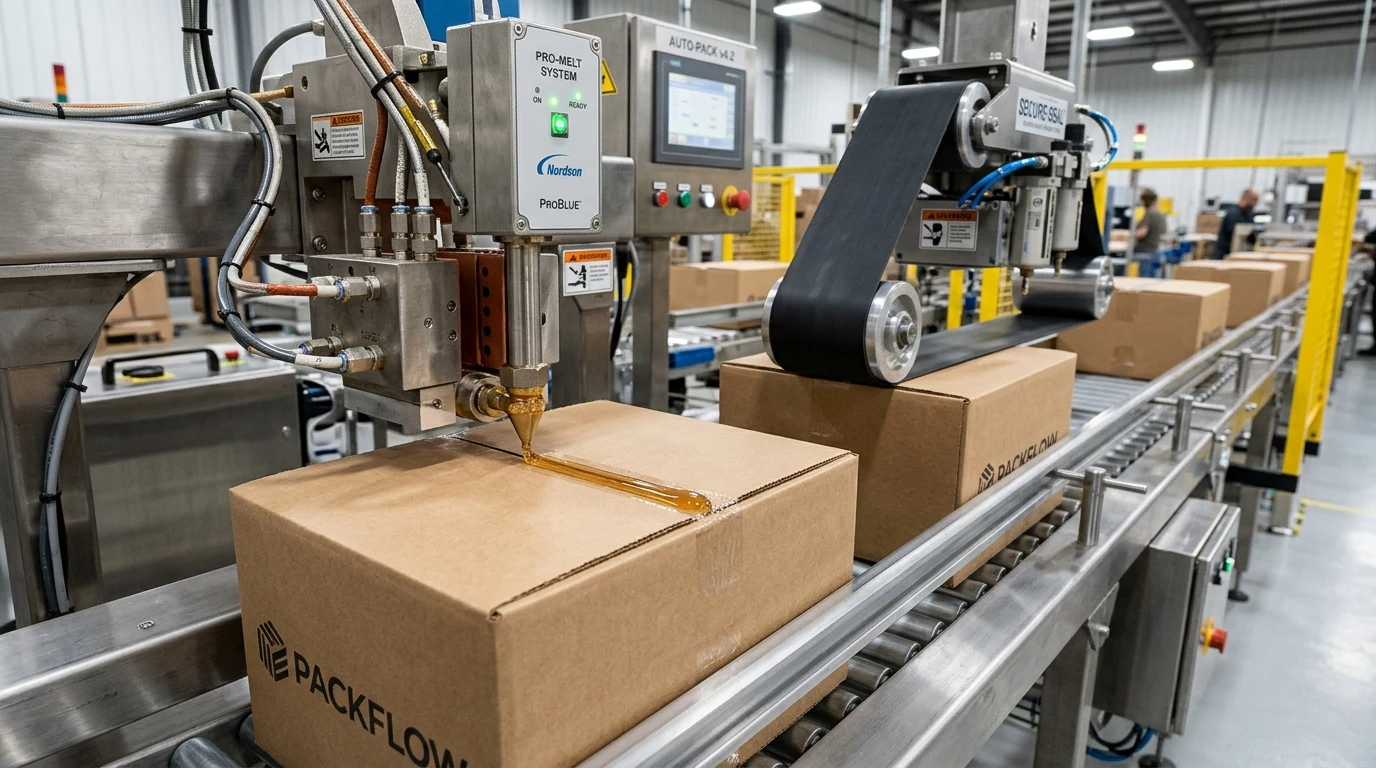
Pop-Open Failures in Corrugated Box and Case Sealing: Root Causes and Hot Melt Solutions
Pop-open packaging failure occurs when carton flaps burst open spontaneously during conveying, compression release, or warehouse transit. Root causes include insufficient hot melt application temperature, exceeded open time, heavy recycled board spring-back (fiber memory), low glue volume, or clogged nozzles due to tank charring. Solutions include switching to high green-strength metallocene polyolefin hot melts and strictly calibrating melt temperatures to technical TDS specifications.
In high-speed food, beverage, FMCG, and e-commerce packaging operations, secure carton closing is essential for parcel integrity. On packaging lines running between 40 and 100 cases per minute, pop-open flap failures represent the most disruptive defect, causing line shutdowns, damaged goods, and shipping rejections.
1. What is Pop-Open and Its Impact on Packaging Efficiency
Pop-open occurs when hot-melt-sealed case flaps spring open immediately after leaving the compression belt or during palleted storage and transit. Examining the failed bond typically reveals either adhesive peeling cleanly off the board surface (adhesive failure) or failing to penetrate paper fibers.
2. The 5 Root Causes of Pop-Open Defects
- Incorrect Application Temperature: Melter, hose, or nozzle temperatures below specification increase viscosity, causing the glue bead to solidify before wetting the substrate (cold bond).
- Exceeded Open Time: Delays between glue deposition and flap compression allow the adhesive surface to skin over.
- Insufficient Compression Pressure / Dwell: High board spring-back (fiber memory) overcomes immature initial bond strength.
- Nozzle Clogging and Char: Carbonized particles inside the tank reduce glue volume and disrupt bead geometry.
- Coatings and Varnishes: Paraffin, acrylic varnishes, or plastic coatings prevent molten glue from penetrating paper fibers.
3. Challenges with Highly Recycled Corrugated Boards
Modern sustainability targets have increased recycled content in testliner and fluting. Recycled fibers are shorter, dustier, and exhibit stiffer flap memory. Conventional EVA glues often fail on dusty liners, whereas advanced metallocene polyolefins penetrate deep into the fibers to guarantee 100% fiber tear.
4. Balancing Temperature, Open Time, and Compression
| Parameter | Target Range | Defect Symptom & Action |
|---|---|---|
| Melt Temperature | 150°C – 170°C (mPO) / 160°C – 180°C (EVA) | Too low: glassy peel; Too high: stringing & char |
| Open Time | 0.5 – 2.0 seconds | Must remain glossy until compression takes place |
| Compression Time | 0.8 – 2.5 seconds | Prevent immediate flap rebound upon release |
| Bead Diameter | 2.0 – 3.5 mm (or stitch pattern) | Thin beads chill prematurely; heavy beads bleed out |
5. EVA vs Metallocene Polyolefin Hot Melt Selection
Metallocene Polyolefin (mPO) hot melts offer distinct advantages over legacy EVA:
- Thermal Stability: Eliminates tank charring, nozzle clogging, and filter blockages.
- Wide Temperature Range: Performs reliably from -40°C deep freeze to +70°C high-heat shipping containers.
- Lower Density & 30% Savings: At ~0.89 g/cm³, mPO delivers higher bond strength with significantly less glue applied.
6. Jowat & Mayer Packaging Adhesive Portfolio
- Jowat-Toptherm® Polyolefin Series: Zero-charring hot melt engineered for deep-freeze and high-speed packaging.
- Mayer Case Sealing Hot Melt: High-tack adhesive designed for high-recycled corrugated boxes.
7. Frequently Asked Questions (FAQ)
For a plant audit or sample trial, get in touch with the Koçak Endüstri engineering team.
Pop-Open Failures in Corrugated Box and Case Sealing: Root Causes and Hot Melt Solutions hakkında merak edilenler
How do you diagnose a pop-open failure on a case sealer?
Inspect the opened flap: If the glue bead peeled away cleanly like plastic, it was a cold bond (early chilling). If no fiber tear is visible, compression pressure or melt temperature was insufficient.
Why do frozen food cases pop open in cold storage?
Conventional EVA hot melts turn brittle below 0°C. Deep freeze packaging requires metallocene polyolefins that maintain flexible bonds down to -40°C.
Does stitch bead pulsing increase pop-open risk?
No. When correctly calibrated with high-performance metallocene adhesives, stitch pulsing reduces glue consumption by 30-50% while maintaining equal bond strength.
How do you improve bonding on 100% recycled testliner?
Use low-viscosity, high-polarity polyolefin adhesives that penetrate through surface dust directly into core fibers.
Technical resources and verification
The content has been prepared in Turkish with the technical experience of Koçak Endüstri, based on the following manufacturer resources.
Let's choose the right adhesive for your application together
You can get technical guidance and offers for Jowat products by sharing your machine, material and consumption information.
Get a technical quote

