

Hot Glue in Printing and Book Binding: EVA and PUR Binding Glues Selection Guide
Adhesive selection in the book binding and printing industry; It is done according to paper weight, paper type (coated or first pulp), ink density and expected opening durability (page pull test). While economical and fast-drying EVA binding hotmelts are used in standard first pulp novels and notebooks; It is mandatory to use reactive PUR hot glue that is resistant to ink and varnish for glossy coated papers over 135 g/m², prestige catalogs and lay-flat books that are required to lie completely flat when opened.
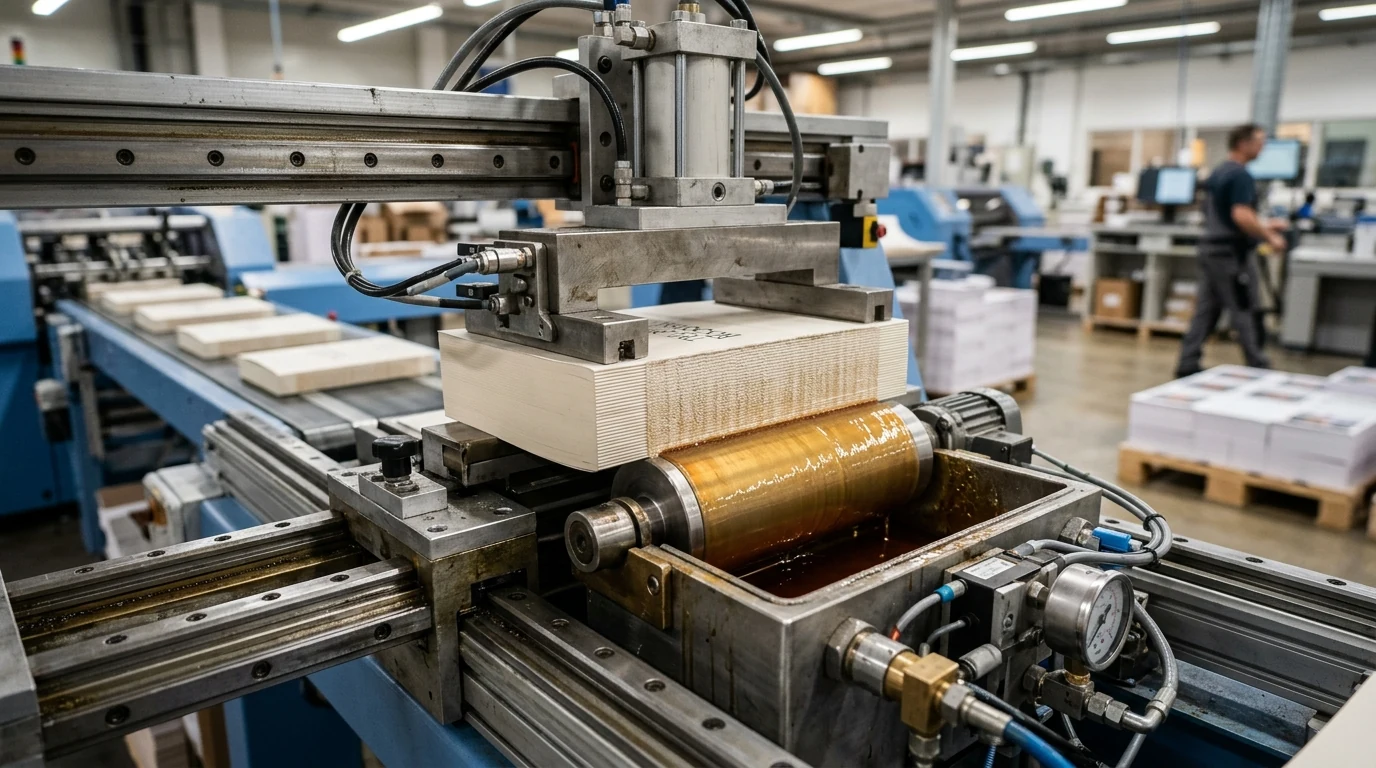
In the publishing, printing and packaging industry, the perceived quality of a book, catalog or magazine depends largely on binding strength. When the reader opens the book, the pages fall off the spine (page breakage) and is the most costly reason for customer returns for printing houses. book binding hot glues used in automatic binding lines (perfect binder) must penetrate deeply into the paper fibers, maintain their flexibility for years and withstand repeated opening and closing.
Koçak Endüstri offers Jowat industrial adhesives and thermoplastic and reactive glues that provide high page adhesion strength within the scope of sectoral solutions for the printing and binding industry.
Critical role of adhesive in printing and book binding
Modern printing houses operate high-speed binding machines (Müller Martini, Horizon, Wohlenberg) that print 1,000 to 10,000 books per hour. At these speeds, the glue must be transferred from the roller to the back surface without splashing, the cover must adhere to the back instantly, and after cooling, a clean cut must be given on the three-knife trimmer. Glue that waxes or sticks to the blade locks the entire production line.
Comparison of EVA and reactive PUR skin adhesives
| Paper Compatibility | 1. uncoated, book paper and lightly coated | Heavy coated, lacquered, varnished and digital printing |
| Opening Flexibility (Lay-flat) | Medium level (The book may not open completely flat) | Perfect (The book opens 180° flat without breaking) |
| Cost and Cleanliness | Low cost, easy maintenance | Requires pre-melter, requires special cleaner |
Page loss problem in coated paper and digital printing
Standard EVA hotmelts cannot fully penetrate the fibers of heavy coated papers, which are non-porous and whose surface is covered with calcium carbonate. Especially in digital toner prints, melting fuser oils prevent adhesion to the paper backing. Under such demanding pressures, chemically cured reactive PUR binding adhesives are the only sure solution; because it chemically bonds to toner oils and coated coating.
Difference between spine and side gluing
- Spine Glue: Holds the spine of the book block. It requires high flexibility and tensile strength. PUR or flexible EVA is used here.
- Side Glue: Enables the cover to stick to the first and last page of the book at a width of 4–5 mm. Special EVA side glues are used that harden very quickly, are hard and act as hinges.
Milling, glue thickness and pressing settings
- Back Milling (Milling & Notching): Form backs should be milled to a depth of at least 1.5–2 mm and the fibers should be exposed by micro notching. Paper dust must be completely sucked by vacuum.
- Application Temperature Control: EVA glues should be controlled precisely in the range of 160–180°C, and PUR glues in the range of 120–135°C.
- Cover Printing: In the capping unit, the back and side jaws should be calibrated according to the paper thickness, and the glue should not overflow from the back to the sides.
Stock and technical support
If you are experiencing page shedding, cover blown or binding spine cracking problems in your printing house; You can contact our Koçak Endüstri technical team to determine the most suitable EVA/PUR adhesive combination for your paper type and binding machine.
Hot Glue in Printing and Book Binding: EVA and PUR Binding Glues Selection Guide hakkında merak edilenler
Why do pages fall out in glossy paper books?
Coated paper is non-porous and coated with calcium carbonate. Since standard EVA glue cannot adhere to fibers, reactive PUR glue that can form a chemical bond must be used.
What is the advantage of PUR skin glue?
It is applied much thinner (0.3-0.5 mm), allows the book to be opened 180 degrees lay-flat, does not tear the pages and does not break in extreme heat / cold.
Why is side glue separate in binding machines?
While the back glue has to be flexible, the side glue has a formula that sets and hardens very quickly to create a hinge effect on the edges of the cover.
How does milling dust affect skin quality?
Paper dust remaining on the spine absorbs the glue and prevents its contact with the fibers; So a good milling vacuum directly increases skin strength.
Technical resources and verification
The content has been prepared in Turkish with the technical experience of Koçak Endüstri, based on the following manufacturer resources.
Let's choose the right adhesive for your application together
You can get technical guidance and offers for Jowat products by sharing your machine, material and consumption information.
Get a technical quote

