

PUR vs EVA Hot Melt in Coated Paper and Digital Print Bookbinding: Page Pull Test, Fuser Oil Resistance, and Lay-Flat Geometry
In perfect binding coated papers and digital electrophotographic prints containing fuser oils and toner waxes, traditional EVA hot melts fail to create mechanical interlocking on non-porous surfaces, leading to page pull-out. Moisture-curing Reactive Polyurethane (PUR) hot melts form irreversible chemical cross-links that resist ink oils and solvents. Applied in an ultra-thin 0.3–0.4 mm film, PUR elevates page pull strength to > 9.0 N/cm while enabling complete 180° lay-flat book opening and enduring thermal resistance from -40°C to +100°C.
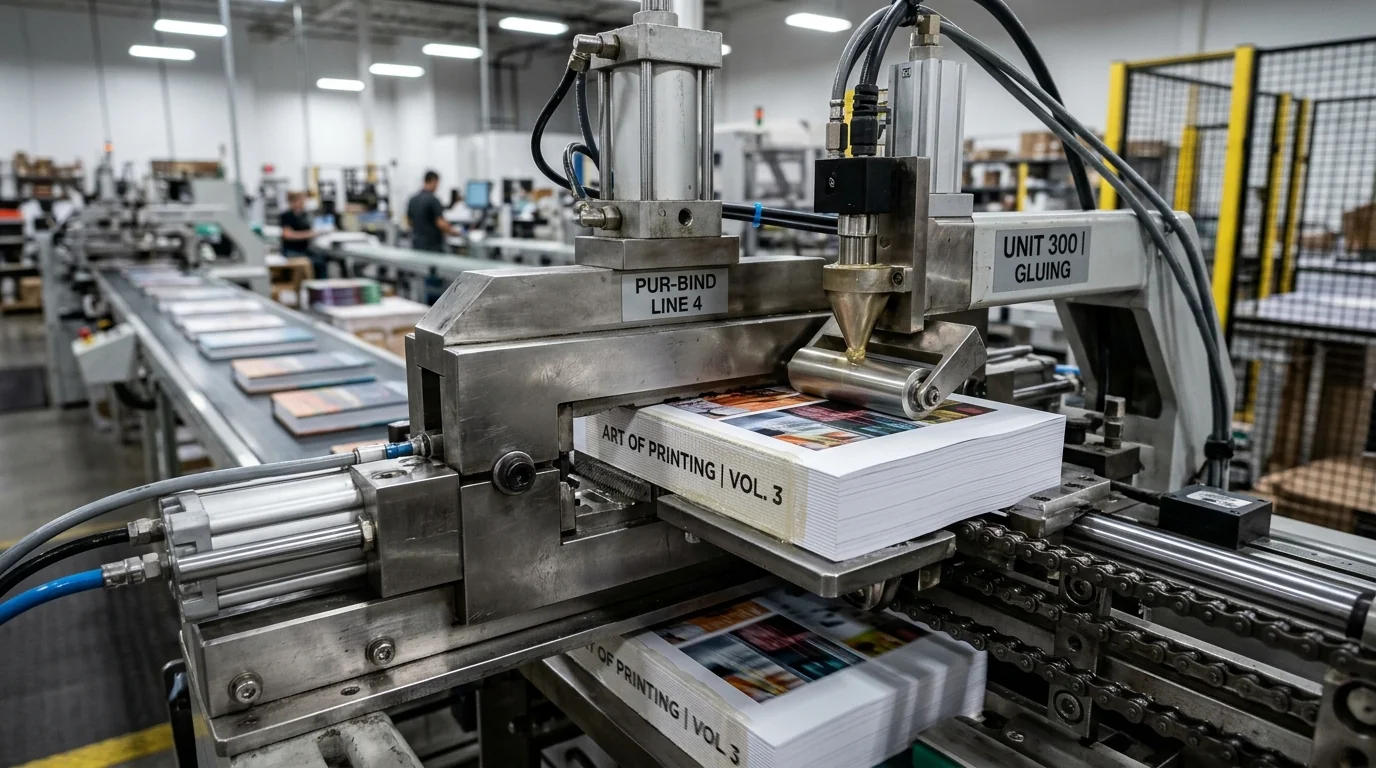
In high-end art books, commercial catalogs, and digital on-demand printing, page detachment along the spine is a critical quality failure. Traditional EVA adhesives fail on coated stocks due to lack of porosity and chemical interference from fuser oils. This engineering guide details the physics of reactive polyurethane (PUR) bookbinding, lay-flat performance, and international pull-test compliance.
1. Chemical Causes of Page Delamination in Coated and Digital Papers
Uncoated wood-free papers allow hot melts to penetrate fibrous networks for mechanical grip. Coated art papers seal fibers under dense kaolin and polymer barriers. Furthermore, digital presses deposit silicone fuser oils and synthetic waxes that destroy EVA surface wetting, causing instantaneous bond failure over time.
2. PUR vs EVA Hot Melt: Chemical Cross-Linking and Elasticity
While EVA merely solidifies via thermoplastic cooling, reactive PUR reacts with paper moisture to form a thermoset polyurethane matrix impervious to oils, solvents, and heat aging.
3. Lay-Flat Opening Geometry: Film Caliper and Spine Flexibility
An applied PUR film of merely 0.30–0.40 mm delivers superior structural strength compared to a 1.0 mm EVA layer. The ultra-thin spine stays flexible, allowing readers to lay the publication completely flat without spine cracking or page loss.
4. Page Pull Test Standards (ISO & FOGRA Certification)
Industrial testing demands page pull values exceeding 9.0 N/cm for coated stocks. Validated PUR bindings exceed 12 N/cm, where the failure mode shifts to substrate paper fiber tearing rather than adhesive bond detachment.
5. Koçak Endüstri & Jowat PUR Bookbinding Adhesives
Jowatherm-Reaktant® series provides industry-leading open times, aggressive tack, and solvent resistance for both nozzle extrusion and roller systems, complemented by certified purge flush cleaning compounds.
6. Frequently Asked Questions (FAQ)
PUR vs EVA Hot Melt in Coated Paper and Digital Print Bookbinding: Page Pull Test, Fuser Oil Resistance, and Lay-Flat Geometry hakkında merak edilenler
Why do coated papers fail with conventional EVA adhesives?
Coated papers feature non-porous mineral coatings that prevent mechanical interlocking. Fuser oils and toner waxes in digital prints further degrade EVA adhesion, causing peel failure.
How quickly can PUR-bound books be trimmed and packed?
Books achieve green strength within seconds for in-line three-knife trimming, while full chemical moisture curing completes within 24 to 48 hours.
What is the recommended PUR spine glue film thickness for lay-flat books?
The ideal thickness is 0.30 mm to 0.40 mm, which provides maximum tensile bond strength while preserving spine elasticity for true lay-flat opening.
Can legacy EVA binding lines be retrofitted for PUR?
Yes. Most commercial perfect binders can be retrofitted with closed nozzle slot applicators and unloader tanks to run PUR efficiently.
Technical resources and verification
The content has been prepared in Turkish with the technical experience of Koçak Endüstri, based on the following manufacturer resources.
Let's choose the right adhesive for your application together
You can get technical guidance and offers for Jowat products by sharing your machine, material and consumption information.
Get a technical quote

