

Charring and Gel Formation in Hot Melt Tanks: Prevention, Root Causes, and Melter Recovery Procedures
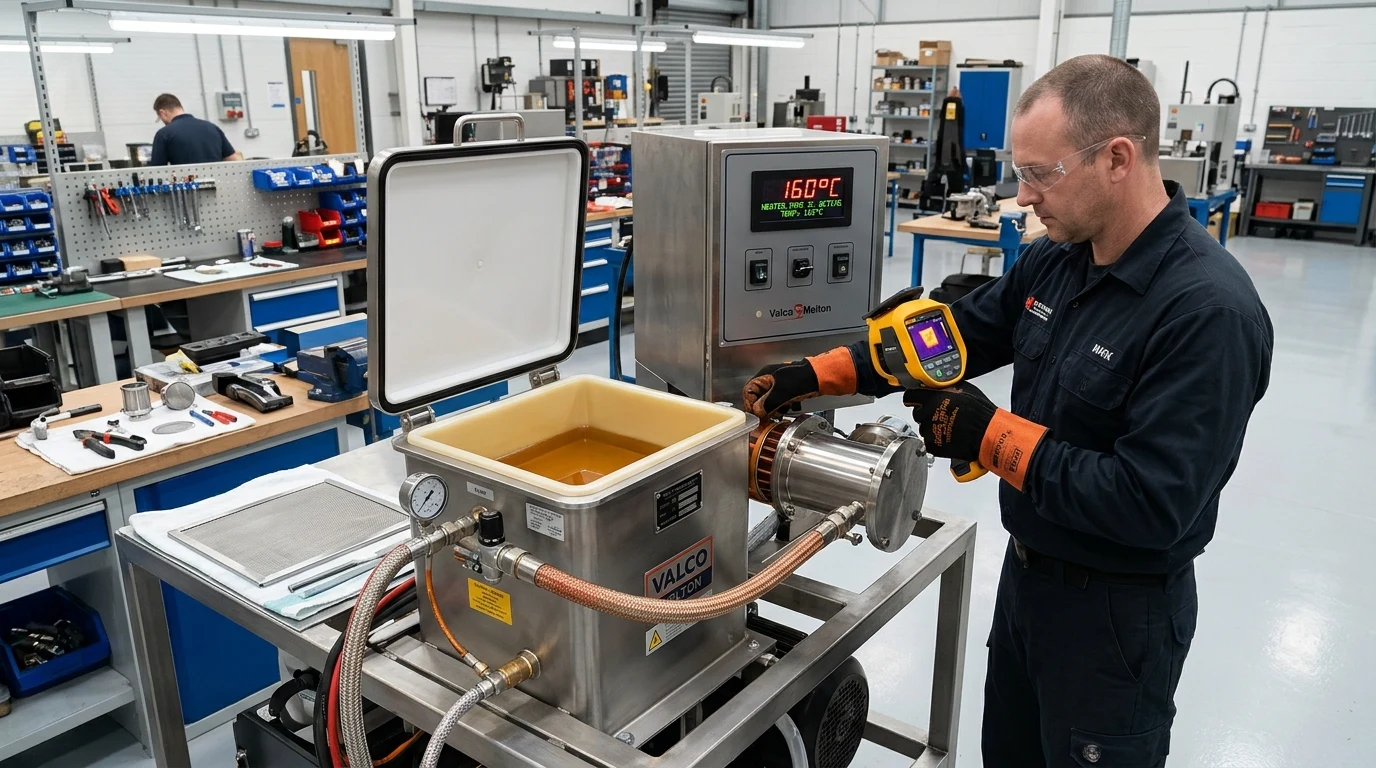
Hot melt tank charring is the thermal oxidation and thermal degradation of adhesive polymers caused by prolonged exposure to high temperatures and atmospheric oxygen, hot spots, or failing to engage standby modes during downtime. These brittle black carbon flakes clog filters, heated hoses, and nozzles, causing severe production disruptions. Solutions include lowering melter temperature to 100°C–120°C during standby, adopting thermally stable metallocene adhesives, and conducting periodic flushing with specialized cleaning compounds.
In automated packaging, edgebanding, product assembly, and labeling lines, hot melt delivery systems are the operational heartbeat. The costliest issue encountered in these systems is charring (thermal degradation) and gel formation inside the melting tank.
1. Chemical Mechanism of Charring and Thermal Degradation
Hot melt glues are organic polymers (EVA, Polyolefin, Polyamide, or PUR). When held at 160°C–200°C in an open tank, atmospheric oxygen depletes the adhesive's antioxidant package, initiating chain scission and cross-linking that yields hard carbon flakes and intractable gels.
2. Impact on Line Efficiency, Downtime, and Maintenance Costs
- Nozzle Blockages: Carbon flakes plug dispensing orifices, resulting in skipped glue beads and pop-open failures.
- Hose & Pump Wear: Char accumulation lines inner hose walls, degrading heat transfer and causing premature gear pump seizure.
- Tank Hot Spots: Insulative carbon crusts force heating elements to overheat, accelerating tank degradation.
3. The 5 Golden Rules of Char Prevention
- Engage Standby Mode: Drop tank temperature to 100°C–120°C if lines halt for more than 30 minutes.
- Keep Tank Lids Closed: Prevents airborne dust ingress and reduces oxygen contact.
- Maintain Adequate Melt Level: Never let glue levels drop below 1/3 of tank capacity to avoid scorching thin tank wall films.
- Calibrate Temperature Sensors: Validate RTD thermocouples biannually with calibrated laser thermometers.
- Select Thermally Stable Polyolefins: Upgrade from degrading standard EVAs to clean-running metallocene polyolefins.
4. Step-by-Step Melter Recovery and System Flushing
To rehabilitate heavily carbonized systems, drain the scorched glue hot, scrape non-stick walls with brass scrapers (avoid steel to protect Teflon coatings), charge with specialized purging compound, flush through open hoses, and recharge with fresh adhesive.
7. Frequently Asked Questions (FAQ)
For on-site tank purging or maintenance audits, contact Koçak Endüstri technical service.
Charring and Gel Formation in Hot Melt Tanks: Prevention, Root Causes, and Melter Recovery Procedures hakkında merak edilenler
What causes hot melt glue to turn black and form char?
Excessive operating temperatures, holding glue at high heat during prolonged line stops without standby mode, and open tank lids exposing molten polymer to oxygen.
Can steel scrapers be used to clean a Teflon-lined tank?
Never. Steel tools scratch Teflon liners. Scratched areas create hot spots where burnt glue bonds permanently. Use only brass or wooden scrapers.
How do you purge a reactive PUR hot melt melter?
Reactive PUR requires a dedicated purging compound (PUR Spülmittel) that reacts with and neutralizes isocyanate groups before flushing.
Which hot melt adhesive resists charring best?
High-purity metallocene polyolefin (mPO) hot melts offer superior thermal stability, running virtually char-free for weeks.
Technical resources and verification
The content has been prepared in Turkish with the technical experience of Koçak Endüstri, based on the following manufacturer resources.
Let's choose the right adhesive for your application together
You can get technical guidance and offers for Jowat products by sharing your machine, material and consumption information.
Get a technical quote

