

What is Hot Melt Glue? Where is it used? Application and Selection Guide
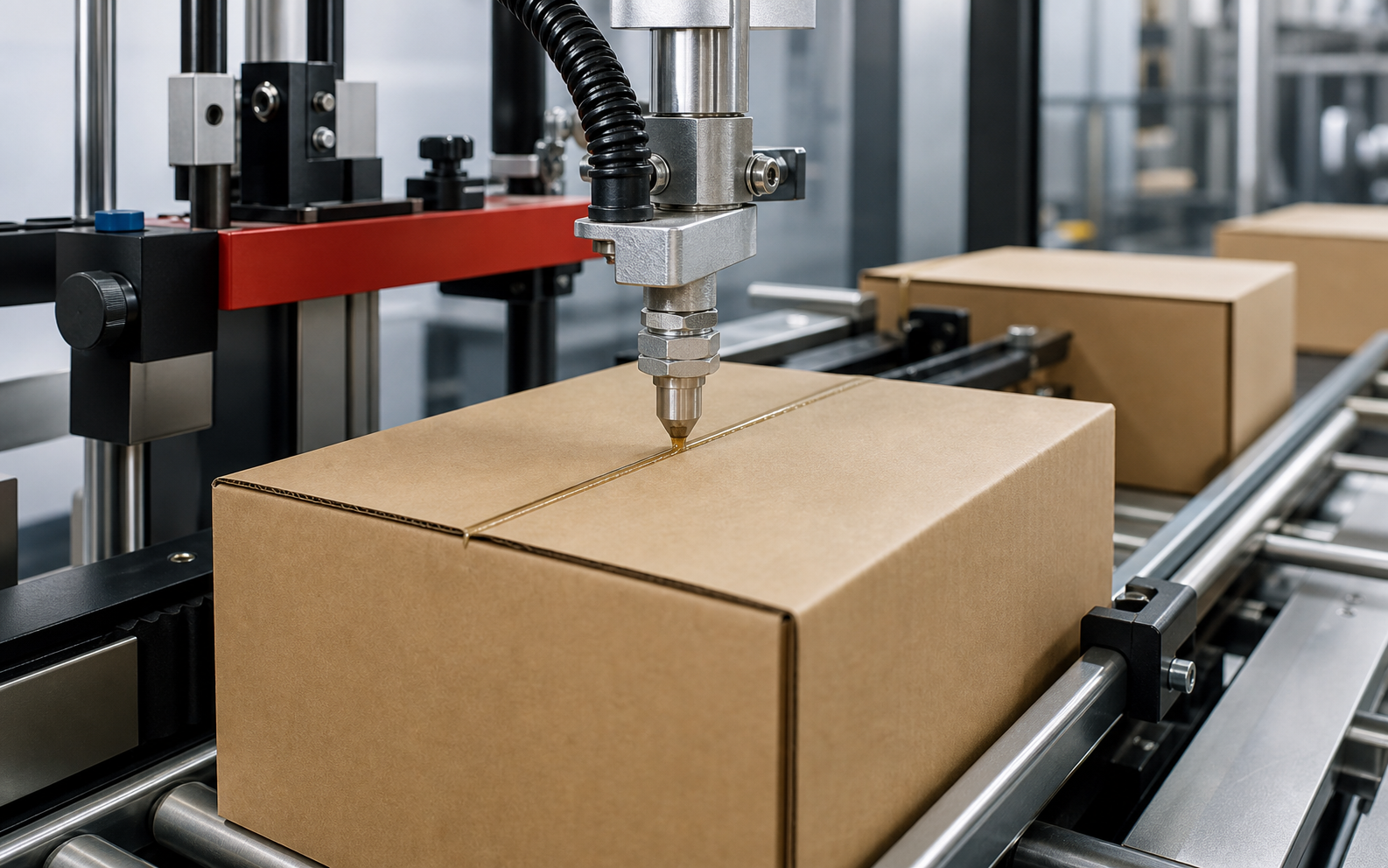
Hot melt glue is a 100 percent solid thermoplastic adhesive that does not contain solvents and is made fluid by heating. It is applied to the application surface in a hot state and creates a rapid initial adhesion as it cools. It is used in packaging, furniture, edge banding, lamination, bookbinding, textiles and various assembly lines; The right choice depends on the surface, machine and process conditions as well as the product family.
hot melt glueis a class of solvent-free industrial adhesives that become fluid when heated, and form a rapid bond by cooling after being applied to the surface. Depending on the formulation, it can be EVA, PUR, PO or PSA based. Therefore, instead of just looking at the temperature range of the product; The bonded material, line speed, surface energy, expected heat and moisture resistance, application equipment and cleaning procedure should be evaluated together.
What is hot melt glue?
In hot melt systems, bond formation basically occurs in two stages: the adhesive is melted at a controlled temperature and transferred to the surface; Then, with cooling, the first adhesion and mechanical bond develops. In reactive species such as PUR, in addition to this physical cooling, chemical curing may also occur with ambient humidity. Solvent-free, fast commissioning and short waiting time on the production line are the highlights of hot melt technology.
Not every hot melt behaves the same. Viscosity, open time, softening point, heat stability, color, adhesion surface and method of application determine the actual performance of the product. For precise temperature, weight and line adjustment, the current version of the selected producttechnical information, TDS/SDS documents and production sample should be taken as basis.
Differences between EVA, PUR, PO and PSA hot melt
| Type | prominent behavior | common use | Things to check |
|---|---|---|---|
| EVA | Economical, fast initial adhesion and easy process | Edge banding, packaging, general assembly | Application temperature, open time, heat and moisture resistance |
| PUR | Moisture curing, high ultimate strength potential | Premium furniture, profile covering, lamination | Protection from moisture, equipment cleaning, curing time |
| P.O. | Clean operation, process stability and good stability on certain surfaces | Packaging, film, lamination and special assembly | Surface compatibility, open time, heat and line speed |
| PSA | Permanent tack activated by pressure | Label, tape, film and repositioning | Surface energy, pressure, peel and shear strength |
As a general starting approach, EVA is used in economical and fast production needs, PUR in long-term durability expectations, PO in clean and stable processes, and PSA in applications where immediate adhesion with pressure is required. This phrase is not an automatic product match; final selection is verified by actual surface and machine testing.
Where is hot melt used?
- packaging: Case closing, box folding, tray forming and high-speed packaging lines.
- Furniture and wood: Edge banding, profile covering, lamination and assembly applications.
- Paper and bookbinding: Book spine, cover, brochure and folding adhesives.
- Textile and hygiene: Material bonding, lamination and special nonwovens applications.
- Automotive and industrial assembly: Fast fixing and in-process joining on controlled surfaces.
When determining the application area, not only the adhesion strength of the product, but also visible joints, flexibility, odor, color, contact conditions with food or consumer product, operating temperature and line cleanliness are taken into account. technology families and related product centers can be examined together in the Koçak Endüstri adhesive catalogue.
How to choose the right hot melt?
- Write down the surfaces to be bonded and possible surface coatings.
- Determine the machine type, hopper or tank structure, nozzle application and line speed.
- Whether initial tack, long-term heat/moisture resistance, or permanent adhesion with pressure is the primary decision give.
- Compare the product's open time, viscosity, recommended temperature and application amount with the current TDS.
- Test color, joint appearance, overflow, odor, cleaning and product changeover process with a production sample.
Application and process control
Hot melt failure is not always caused by the adhesive. Low surface temperature, insufficient pressure, dirty surface, short open time compared to line speed, excessive or low grammage, inappropriate nozzle and prolonged exposure to high temperature may cause similar symptoms. Surface preparation, belt tension and pressure rollers for edge banding; For packaging, capping pressure, carton absorbency and line synchronization should be controlled together.
For a safe and repeatable application, the manufacturer's TDS/SDS document, the machine manufacturer's procedure and Koçak Endüstri technical guidance should be used together. Depending on your needs, you can review Jowat products, general product catalog or technical offer and application support.
What is Hot Melt Glue? Where is it used? Application and Selection Guide hakkında merak edilenler
Is hot melt glue the same as water-based glue?
No. Hot melt is a 100 percent solid system that becomes fluid with heat and forms a bond upon cooling. In water-based glue, bond formation largely proceeds with the evaporation of water and the formation of the polymer film. Machine, drying time and surface conditions vary.
At what temperature is hot melt glue applied?
There is no single application temperature; Varies depending on product family and product. Based on tank, hose and nozzle spacing in the TDS, temperature should be controlled not only for flow but also for colour, viscosity and heat stability.
Should I choose EVA or PUR?
EVA can be evaluated in economical, fast and general-purpose applications. PUR may come to the fore in applications where moisture, heat and long-term resistance are critical or where a thinner adhesion line is required. The final decision must be made through surface, machine and production testing.
Technical resources and verification
The content has been prepared in Turkish with the technical experience of Koçak Endüstri, based on the following manufacturer resources.
Let's choose the right adhesive for your application together
You can get technical guidance and offers for Jowat products by sharing your machine, material and consumption information.
Get a technical quote

