

Adhesive Engineering in Glulam and Mass Timber Manufacturing: EN 301, EN 15425, and Fire/Moisture Resistance
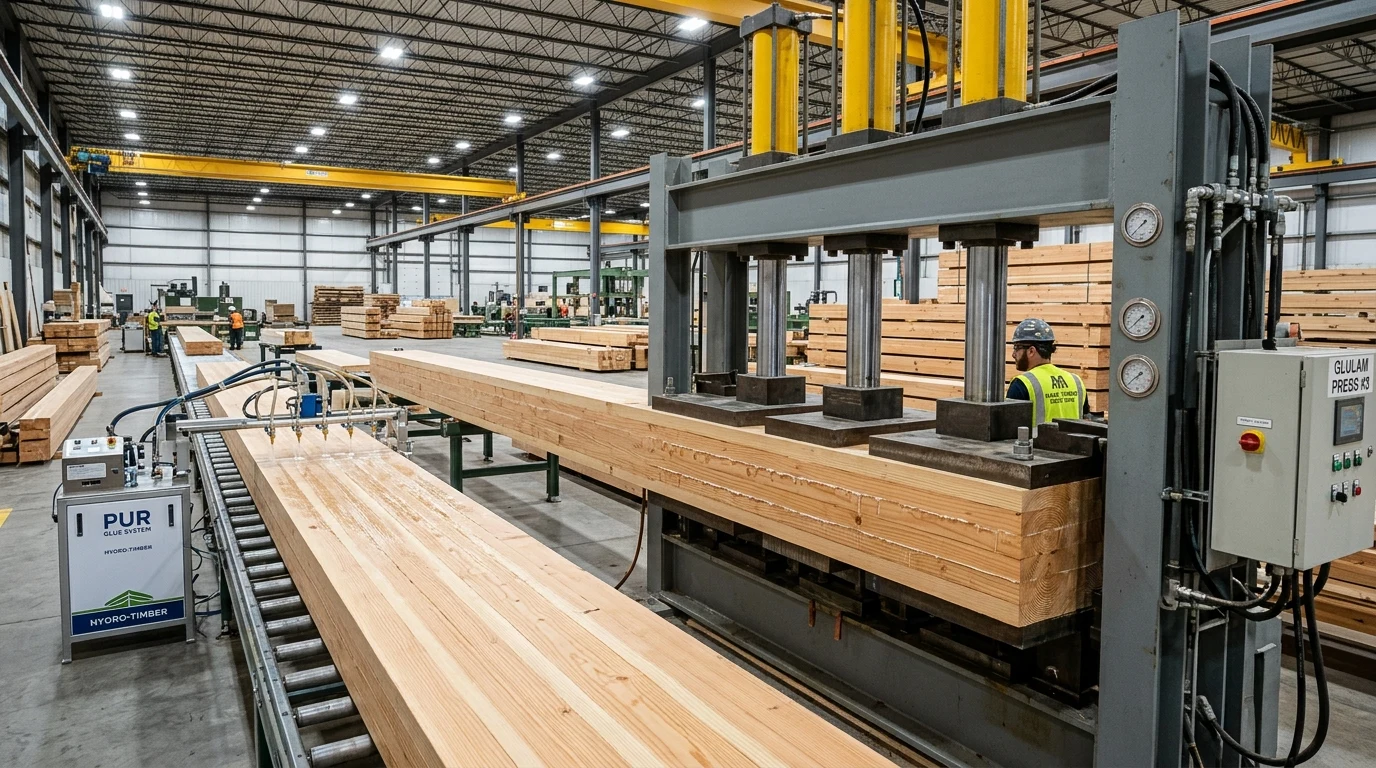
Adhesives used in load-bearing mass timber such as Glulam and CLT must be certified to EN 15425 (Type I one-component polyurethane - 1K PUR) or EN 301 (Phenolic and aminoplastic - PRF) under structural building codes. 1K reactive polyurethanes (Jowapur® series) have become the premier global choice thanks to zero formaldehyde and VOC emissions, transparent bondlines, and 100% wood fiber tear. The adhesive bondline must maintain structural integrity during fire events, matching the natural charring rate of structural timber.
As the cornerstone of modern sustainable architecture, Glulam (Glued Laminated Timber) and CLT (Cross Laminated Timber) elements carry immense structural loads. In these critical elements, the adhesive bondline must be stronger than the wood itself, resisting delamination for decades.
1. Static Role of Adhesives in Glulam and Mass Timber
Unlike standard joinery adhesives, structural glues bear dynamic roof and column loads. A bondline failure risks catastrophic structural collapse. Structural adhesives are rigorously tested and certified by independent bodies (such as MPA Stuttgart).
2. Structural Standards: EN 15425 and EN 301 Norms
- EN 15425 (Type I - 1K PUR): Governs single-component polyurethanes for load-bearing timber, testing shear strength, creep, and delamination cycles.
- EN 301 (PRF Adhesives): Legacy two-component resorcinol glues with dark bondlines and formaldehyde emissions.
- Service Class 3: Full exterior exposure demanding Type I certified adhesives under Eurocode 5 (EN 1995-1-1).
3. 1K Polyurethane (Jowapur) vs Traditional PRF Systems
Modern mass timber manufacturers have shifted from resorcinols to 1K PUR (Jowapur®) due to 100% formaldehyde-free chemistry, invisible bondlines, and simplified automatic application without mixing.
7. Frequently Asked Questions (FAQ)
For technical datasheets, certification audits, and structural timber bonding support, contact Koçak Endüstri.
Adhesive Engineering in Glulam and Mass Timber Manufacturing: EN 301, EN 15425, and Fire/Moisture Resistance hakkında merak edilenler
Why is EN 15425 certification mandatory for Glulam beams?
EN 15425 certifies that the adhesive will not delaminate during fire, seismic activity, or moisture cycles in load-bearing structural applications.
What is the key advantage of 1K PUR over PRF resorcinol?
1K PUR is completely formaldehyde-free, requires no mixing, and forms an aesthetically clean, transparent bondline without black seams.
How does wood moisture affect PUR bonding?
Single-component PUR cures by reacting with moisture in the timber. Wood moisture should ideally be between 9% and 14% for optimal curing.
How do Glulam adhesive bondlines perform in fire?
Certified EN 15425 adhesives do not fail prematurely under heat, preserving timber lamination while the outer wood chars at predictable rates.
Technical resources and verification
The content has been prepared in Turkish with the technical experience of Koçak Endüstri, based on the following manufacturer resources.
Let's choose the right adhesive for your application together
You can get technical guidance and offers for Jowat products by sharing your machine, material and consumption information.
Get a technical quote

