


What is Low Temperature (Cool Melt) Hotmelt Glue? Energy Saving and Packaging Line Efficiency
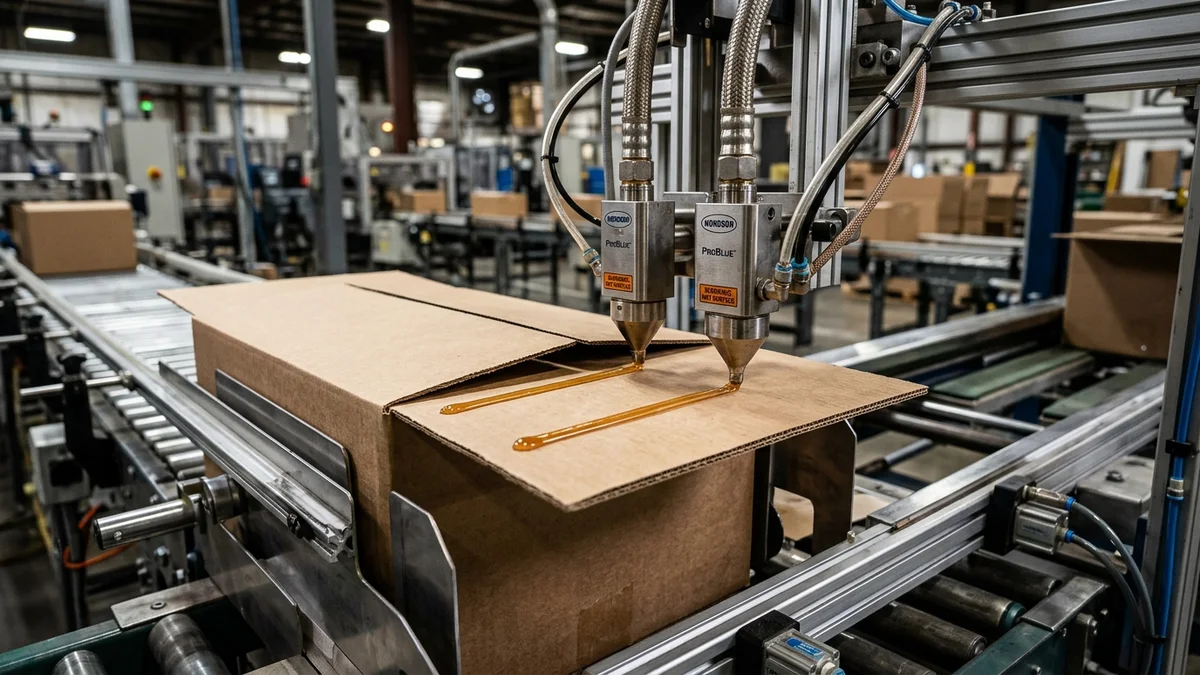
Low temperature (Cool Melt) hotmelt adhesives are advanced technology hot melt adhesives that melt and adhere in the 120-140°C band instead of the 160-190°C application temperature of traditional EVA hotmelts. It reduces energy consumption by up to 30-40%, reduces thermal carbonization inside the tank and nozzle to zero, reduces the risk of operator burns, and offers very fast adhesion (short open time/fast cure) in high-speed parcel/box lines.
Cost management in industrial packaging, corrugated cardboard packaging and cardboard box closing lines is not limited to the glue price per kilogram. High electricity consumption, nozzle clogging, in-tank carbonization (carbon accumulation) and line stoppages are the most critical factors that determine the total operating cost. Low temperature (Cool Melt) hotmelt adhesives provide superior adhesion strength at 30-50°C lower temperature compared to standard adhesives, permanently reducing the carbon footprint and process costs of modern production facilities.
As Koçak Endüstri, we offer special technical optimization and sample support for your facilities with Jowat industrial adhesives and hot melt product families , which provide high efficiency in packaging lines.
What is low temperature (Cool Melt) hotmelt?
Standard EVA-based packaging glues generally require operating temperatures between 160°C and 190°C. Cool Melt (low melting temperature) hotmelts exhibit complete melting, low viscosity and high wetting ability in the 120°C to 140°C band, thanks to special polymer modifications and optimized synthetic resin structures.
Despite the low application temperature, the setting time is extremely short. In this way, it provides excellent fiber tear resistance without the need to extend the pressing time on high-speed lines that print hundreds of boxes per minute.
Traditional hotmelt vs. cool melt decision matrix
| Carbonization in Tank and Nozzle | Medium/high at high temperature | Minimum / Negligible |
Energy, nozzle maintenance and OHS benefits
- Direct Energy Saving: Keeping the glue tank, heated hoses and applicator heads constantly at 130°C instead of 180°C saves thousands of kilowatt-hours of electricity per month on a facility basis.
- Zero Carbonization and Clean Filters: Cool melt technology prevents the adhesive waiting at high temperature from oxidizing and clogging the nozzles (carbonization). Thus, nozzle cleaning and filter replacement downtimes are minimized.
- Quick Startup: The time for the glue tank to reach the melting temperature at the beginning of the shift decreases from 45 minutes to 15-20 minutes, increasing line start-up efficiency.
- Safer Work Area: Burn severity is much lower in case of possible operator contact; The smoke and odor emitted into the environment are completely eliminated.
In which packaging and production lines is it used?
- Fast Consumption (FMCG) and Food Packaging: Final case sealing stations of biscuits, pasta, beverages and canned cans.
- Cardboard Box and Tray Installation: Corrugated cardboard tray forming processes that require instant adhesion at high line speeds.
- Cold Storage and Deep Freezer Packaging: Box closure that does not open in -25°C environment with formulations that maintain their flexibility at low temperatures.
- E-Commerce and Cargo Packaging: Logistics shipping boxes that require rapid opening resistance and high impact resistance.
Things to consider when transitioning to cool melt
- System Cleaning: Before switching to the cool melt product, the old high temperature glue in the tank should be drained and washed with system cleaner.
- Velvet Temperature Calibration: Tank, hose and nozzle temperature zones should be lowered step by step to the 120-130°C range specified in the manufacturer's technical data sheet (TDS).
- Pressure and Grammage Verification: Since the glue may have a more fluid viscosity, the grammage per box should be optimized by adjusting the pump pressure (excess glue consumption is prevented).
- Fiber Tear Test: 3-5 seconds after gluing, the box tabs should be opened and it should be confirmed that the cardboard fibers are completely torn.
Stock, samples and technical support
Koçak Endüstri provides engineering support for low temperature cool melt solutions that will increase efficiency and save energy in your packaging lines. To determine the most appropriate product code for your current box type, line speed and applicator model, you can get information via the Jowat Quotation Form or review our contents of the Technical Information Center .
What is Low Temperature (Cool Melt) Hotmelt Glue? Energy Saving and Packaging Line Efficiency hakkında merak edilenler
What is cool melt (low temperature) hotmelt glue?
It is a new generation hot glue that is applied at 120-140°C instead of the standard 160-190°C, saving energy and preventing nozzle carbonization.
Does low temperature glue reduce the adhesion strength of the parcel?
No. Thanks to the correct polymer technology, it provides the same or higher fiber tear strength on the cardboard surface than standard glues.
Do I need to replace my existing hotmelt machine?
No. Nordson, Robatech, Valco Melton etc. It can be used directly in standard hotmelt tanks and applicators by lowering the temperature setting.
How much energy saving?
Since the working load of the tank, hose and nozzle resistances is reduced, an average of 30% to 45% savings in heating energy is achieved.
Technical resources and verification
The content has been prepared in Turkish with the technical experience of Koçak Endüstri, based on the following manufacturer resources.
Let's choose the right adhesive for your application together
You can get technical guidance and offers for Jowat products by sharing your machine, material and consumption information.
Get a technical quote

