

What is the Difference Between D3 and D4 Wood Glue?
D3 and D4 are groups within the scope of EN 204, which classify the water resistance performance of thermoplastic wood adhesives. In general, D3 is for interior applications exposed to short-term water or high humidity; D4, on the other hand, is considered for outdoor scenarios with heavier humidity conditions and appropriate surface protection. Final conformity should be verified by product sheet and parts testing.
The terms “D3 glue” and “D4 glue” are not a brand or a single chemical recipe. These classes are associated with the EN 204 standard, which evaluates the performance of thermoplastic wood adhesives under specific water and humidity conditions. The class of an adhesive refers to verified performance under standard test conditions; It does not guarantee that the part will automatically be suitable for outdoor use in all conditions.
What do D3 and D4 mean?
Class D3 is generally considered for interior applications that may be exposed to frequent short-term flowing or condensing water or high humidity. Some exterior applications with appropriate surface protection and not directly exposed to weather conditions may also be considered depending on the technical scope of the product.
Class D4 is a higher performance class for interior applications where longer or heavier water/moisture exposure is expected and for outdoor conditions under appropriate surface protection. However, D4 expression; It does not alone guarantee the outdoor resistance of wood, design, coating and combination geometry.
Key differences between D3 and D4
| Criteria | D3 | D4 |
|---|---|---|
| Moisture/water performance | Class for high humidity and short-term water exposure | Higher class for more severe and long-term moisture/water conditions |
| Typical evaluation | Kitchen, bathroom surroundings, interior joinery and protected applications | Intense humidity, harsh indoor environment and exterior application scenarios with protective surface |
| Process | Can be single or multi-component, depending on the product | Can be a single-component reactive or hardener system, depending on the product |
| Verification | Current technical sheet, EN 204 performance and real part testing are evaluated together | |
What information is needed when choosing D3 or D4?
- Will the piece be used indoors or outdoors?
- Is water contact in the form of splashing, condensation, cleaning or persistently high humidity?
- What is the wood type, moisture content, surface treatment and joint geometry?
- What is the pressing method, pressing time, ambient and material temperature?
- Will the final product be painted, varnished, or receive any other protective surface treatment?
- What are the open waiting and cleaning requirements of the production line?
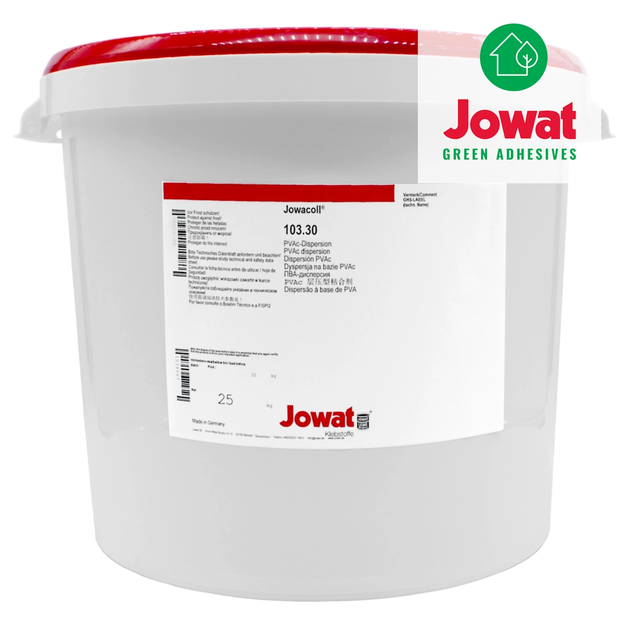
Unnecessarily moving towards a higher class does not always mean a better process. The product's open waiting time, press conditions, cleanability, hardener use and cost must also be compatible with the production target. Koçak Endüstri's D3–D4 wood adhesive page provides a technical introduction to the relevant Jowacoll options.
Application checklist for wood gluing
- Measure wood moisture and surface cleanliness before production.
- Apply the adhesive in the amount and open waiting time recommended by the manufacturer.
- Verify press pressure and time according to wood type, part geometry and product sheet.
- Do not force the test sample before full strength has been achieved.
- Before mass production, perform a performance test on the real part in accordance with the water/humidity and usage scenario.
What is the Difference Between D3 and D4 Wood Glue? hakkında merak edilenler
Is D4 glue completely waterproof?
D4 is a water resistance performance class; It is not a guarantee of unlimited waterproofness for the entire glued part. Wood, joint design, surface protection and production quality determine the result.
Can D3 glue be used outdoors?
Some D3 products may be considered in applications that are not directly exposed to weather and have appropriate surface protection. Exact suitability should be checked from the product technical data sheet and the manufacturer's approval.
Is the difference between D3 and D4 only strength?
The grade basically refers to water/moisture performance. Products may also differ in open residence, press time, viscosity, component structure and process requirements.
Is a hardener required for D4 adhesive?
It varies depending on the product. Some systems may be single-component reactive, some may be hardener-containing. The mixing ratio and duration of use should only be applied according to the current technical sheet.
Technical resources and verification
The content has been prepared in Turkish with the technical experience of Koçak Endüstri, based on the following manufacturer resources.
Let's choose the right adhesive for your application together
You can get technical guidance and offers for Jowat products by sharing your machine, material and consumption information.
Get a technical quote